
Many assume that brand protection begins and ends with traditional trademark law. But some of the most powerful safeguards for names, symbols, and product designations exist completely outside of our trademark law statutes. For example, use of the terms Olympic, Swiss Made, Champagne, and Scotch Whisky are governed by specialized laws and international agreements that strictly regulate their use. Understanding these legal frameworks can help avoid costly missteps when selecting a trademark.
Beyond Trademarks: The Concept of Protected Names
In the U.S., trademark law protects distinctive words and logos that identify the source of goods or services. However, governments and international bodies have supplanted traditional trademark law via treaties and statutes to define trademark-like rights that otherwise would not exist under traditional trademark law.
International and Treaty Protections
Globally, the World Trade Organization’s “Agreement on Trade-Related Aspects of Intellectual Property Rights” (TRIPS) requires member countries to protect geographical indications (GIs)—names that link a product’s quality or reputation to its place of origin.

Separately, the WIPO Lisbon System enables countries to register appellations of origin or GIs through a single international filing, ensuring recognition across participating nations. These treaties form the backbone of national systems that regulate place of origin terms like Champagne and Roquefort.
European Union: Champagne, Roquefort, and Beyond
The European Union has built one of the world’s most comprehensive GI systems. Producers who meet strict criteria within designated regions may use protected names such as Champagne (sparkling wine from France’s Champagne region) or Roquefort (blue cheese aged in the natural caves of Roquefort-sur-Soulzon).
The EU also enforces designations like Protected Designation of Origin (PDO), Protected Geographical Indication (PGI), and Traditional Speciality Guaranteed (TSG) across food, wine, and spirits product categories.
United Kingdom: The Scotch Whisky Example
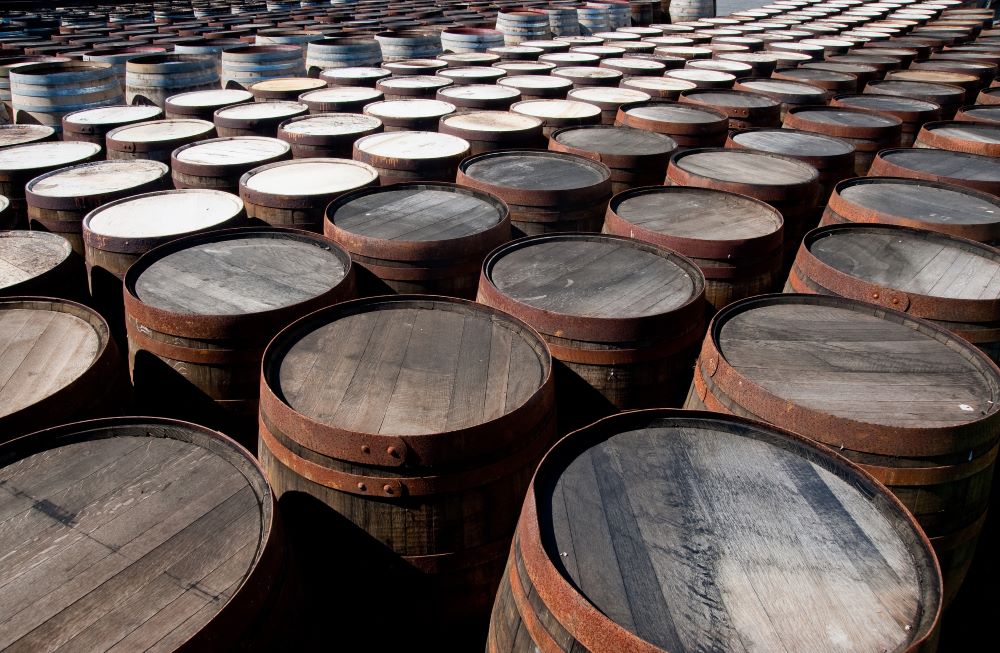
The UK’s Scotch Whisky Regulations apply similar principles. To be labeled Scotch, whisky must be distilled and matured in Scotland for a minimum of three years. The regulations also reserve sub-regional names such as Islay and Speyside, reinforcing geographic authenticity.

United States: Special Categories of Protected Names
While the U.S. doesn’t have a unified GI statute, several federal systems offer quasi-trademark protections for origin-based names. For distilled spirits, federal regulations designate certain products as distinctive. For example, Bourbon must be produced in the U.S.; Scotch must come from Scotland; and Tequila and Mezcal are recognized as distinctive products of Mexico, requiring certification from Mexican authorities.
Switzerland: The “Swissness” Rules
Switzerland enforces one of the world’s strictest country-of-origin labeling systems. Since 2017, products labeled Swiss Made must meet detailed origin requirements: for industrial goods, at least 60% of manufacturing costs must occur in Switzerland, and for food products, 80% of raw materials (by weight) must be from Switzerland (100% for milk and dairy). The use of the Swiss cross and coat of arms is also tightly regulated to prevent misleading associations with official symbols.
U.S. Statutory Protections Outside Trademark Law
Some U.S. statutes reserve specific words and emblems for exclusive use. The U.S. Olympic & Paralympic Committee holds rights to the word Olympic, the five interlocking rings, and related symbols under federal law. In a 1987 Supreme Court case, these rights were upheld even without evidence of consumer confusion.

Other U.S. statutes prohibit unauthorized use of the Red Cross, Red Crescent, and other Geneva-recognized emblems. Additional laws restrict misleading use of terms like Federal, United States, or Reserve in financial services. Even phrases like Boy Scouts and Girl Scouts are protected by statute.
Cultural Heritage Issues
In 2025, Prada showcased leather sandals in Milan that closely resembled Indian Kolhapuri chappals, known for their toe loop and braided T-strap. Critics argued that Prada commercialized a traditional Indian craft at luxury prices without acknowledging its origin. Prada believed that avoiding the GI-protected Kolhapuri name would sidestep enforcement—but instead, the launch sparked a reputational and ethical backlash.
Why It Matters
Before conducting a trademark clearance search, it’s wise to consider whether the proposed name has ties to a geographic region, resembles a generic designation, or draws from cultural heritage. These factors can trigger legal restrictions—or public scrutiny.