



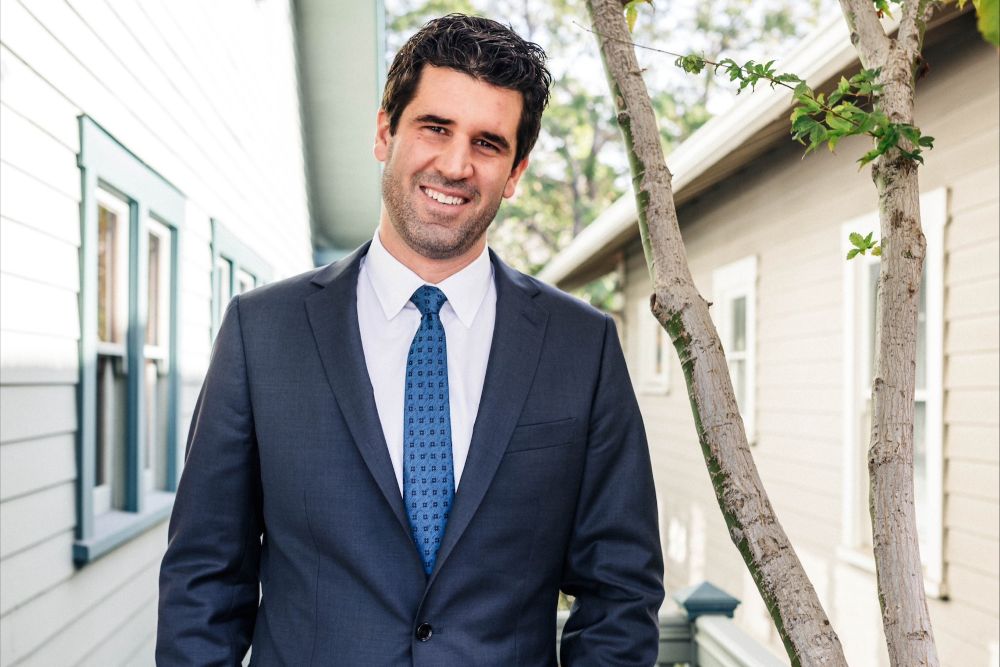

For more than two decades, trial lawyer Taylor Ernst with the Ernst Law Group has dedicated his practice to understanding, proving, and teaching the complexities of traumatic brain injury (TBI) litigation. In his conversation with us, Ernst discusses how he became a leader in the field, why TBI cases are so often misunderstood, and how his proprietary litigation frameworks helped him win against one of the largest companies in the world.
AALM: How did you first become involved in traumatic brain injury cases? What pulled you into this area of law?
TE: Early in my career, I realized something frustrating: there were virtually no resources that truly explained how to work up a TBI case. These cases are incredibly complex, and I watched too many clients fall through the cracks. That pain, paired with a desire to do right by clients, pushed me into this field. I wanted to build what I needed as a young lawyer and help arm other lawyers with exactly the tools that have worked for me.
AALM: TBI cases are often misunderstood in litigation. Why?
TE: Most TBI cases fail not because the injury is subtle, but because lawyers rely on the wrong proof systems. The legal system remains anchored to acute care metrics, imaging, and chart-based medicine, none of which were designed to measure how the brain functions in daily life. Scans can be helpful in identifying injury, but they do not establish damages. When lawyers build cases around medical records alone, they are litigating the wrong question. The real issue is not whether a brain injury occurred. It is how that injury reshaped a person’s capacity to live, work, decide, and relate to others. Once you shift the methodology, the case becomes clear.
AALM: What are those TBI frameworks, broadly speaking?
TE: They’re a set of investigative, medical, and narrative tools developed over years of litigating TBI cases. They connect complex medical science to real human experience in a way that juries understand. The guiding principle is simple: don’t rely on what’s written in the chart; figure out how the injury changed the client’s life. Then prove it.
AALM: You’re turning those frameworks into a book. What inspired you to write it?
TE: I’ve been working on this book, “The Ernst Way: The Definitive Guide to Brain Injury Litigation,” for five years. It’s about 350 pages and represents everything I wish I had access to when I started. TBI is one of the largest unaddressed public health problems in the country, with 1.6 million traumatic brain injuries occurring every year. Around 50% of the homeless population has a frontal lobe injury that affects decision-making. We underestimate the societal impact because we don’t see the injuries. This book is meant to give lawyers the tools to understand medical science and present these cases effectively.
AALM: Let’s talk about using the TBI litigation framework to win a landmark verdict against Chevron in a toxic tort case.
TE: The facts were difficult, the venue was historically unfavorable to plaintiffs, and Chevron entered trial confident in its defense. By applying the same litigation framework we use in traumatic brain injury cases to a toxic exposure claim, the jury was able to understand the real-world impact of decades of concealed benzene risk. The result was a $63 million verdict for a homeowner who unknowingly built his family home on a former oil pit. The case confirmed that the framework is not injury-specific. It is a proof system.
AALM: Is TBI the only type of case you handle now?
TE: Yes. My practice is almost exclusively TBI. I personally handle a low number of cases because the workup required is intensive, but I look at hundreds each year. If a case is under $5 million, I usually help the lawyer behind the scenes. If it’s larger, we may take it on. But the goal is always the same: help everyone who reaches out. This is how we raise the bar nationwide.
AALM: People have started calling you “the King of TBI.” How do you feel about that?
TE: I have heard the title, and it is flattering, but I do not want to be the king of TBI. One lawyer can only try so many cases. The real problem in this field is not effort or intelligence. It is that most lawyers are handed proof systems that were never designed to show how brain injury actually changes a person’s life. My work is focused on correcting that. When lawyers shift the way they investigate and prove these cases, juries see what medical charts miss. That is how outcomes change at scale. We help anyone who reaches out, and we take on only a small number of cases each year so the work stays precise and disciplined.



Comments 1
I’m a chiropractor in the DMV – DC/Maryland/Virginia area.
I’m looking to purchase your book, “The Ernst Way”. AMAZON is not helping me.
I would like to use the info in your book to appeal to PI lawyers in the DMV. I have only been involved with mTBI since September, 2025.
[email protected]