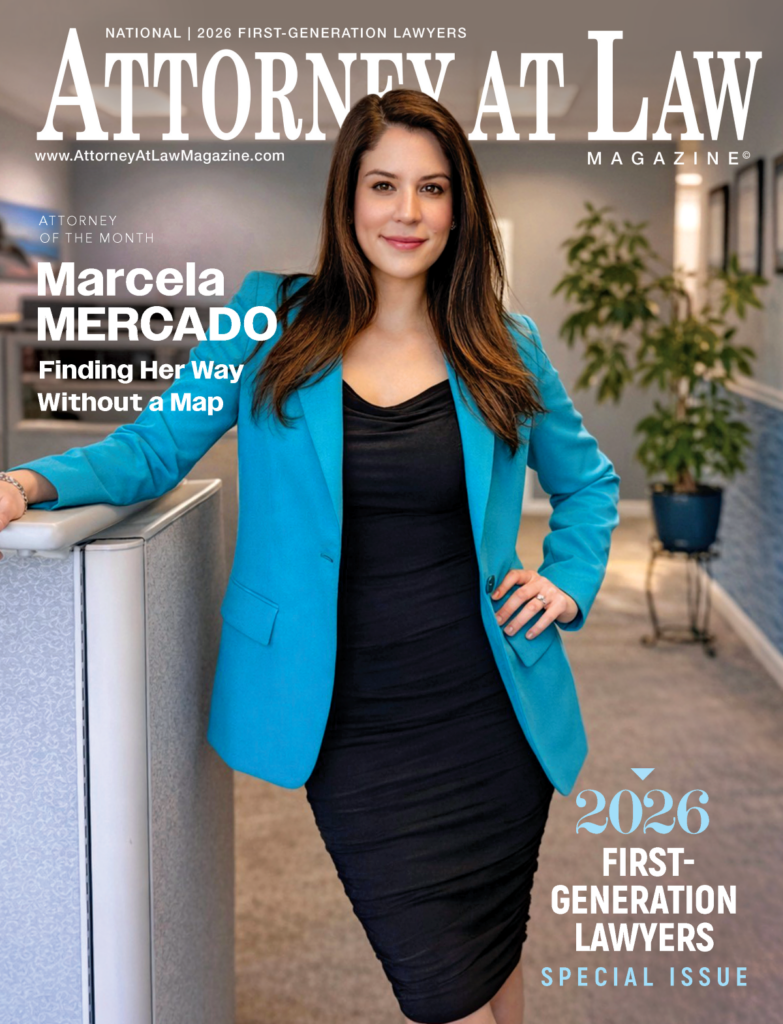


Marcela Mercado: Finding Her Way Without a Map
“I didn’t grow up knowing lawyers,” attorney Marcela Mercado says. “I grew up knowing work.” A strong willed, determined, and gifted student of life, Mercado was determined to create a future that would not be determined by her past or any challenges she and her family have weathered. Today she is not only a highly respected and successful personal injury attorney






 Your background is not a limitation—it is an asset.
Being a first-generation lawyer means learning the law while simultaneously learning the profession. Without family guidance or institutional familiarity, many of us enter the field feeling one step behind. Over time, I learned that this perceived disadvantage can become a source of strength.
For new and aspiring lawyers, my advice is simple but deliberate. Be proactive about building your professional literacy. Ask how things work, not just why they work. Observe how attorneys communicate with clients, manage deadlines, and navigate office dynamics—these skills are rarely taught in law school but are critical to long-term success. Additionally, invest in your reputation early. Consistency, professionalism, and follow-through will carry more weight than any résumé credential.
Finally, give yourself permission to grow into the role. Confidence does not arrive on day one; it is earned through preparation and experience. The legal profession benefits when those without traditional access persist, contribute, and lead with authenticity.
Your background is not a limitation—it is an asset.
Being a first-generation lawyer means learning the law while simultaneously learning the profession. Without family guidance or institutional familiarity, many of us enter the field feeling one step behind. Over time, I learned that this perceived disadvantage can become a source of strength.
For new and aspiring lawyers, my advice is simple but deliberate. Be proactive about building your professional literacy. Ask how things work, not just why they work. Observe how attorneys communicate with clients, manage deadlines, and navigate office dynamics—these skills are rarely taught in law school but are critical to long-term success. Additionally, invest in your reputation early. Consistency, professionalism, and follow-through will carry more weight than any résumé credential.
Finally, give yourself permission to grow into the role. Confidence does not arrive on day one; it is earned through preparation and experience. The legal profession benefits when those without traditional access persist, contribute, and lead with authenticity.  Who I am as a lawyer is the result of weaving my lived experience as a first-generation immigrant into professional advocacy. As the first to learn English in my family, I was tasked with navigating an unfamiliar system and culture to help my family assimilate. Through this journey, we faced resistance because of our otherness and at a young age I was forced to build resilience, adaptability, and empathy – qualities that have been essential in my practice. These experiences have not only fostered a deep understanding of how laws and institutions affect individuals who feel marginalized or unheard, but also propelled me further into being an advocate for others.
Occupying a space that previous generations could not access gives me a strong sense of purpose to show that the law can be a tool for empowerment rather than exclusion. My presence alone challenges stereotypes, broadens representation, and reinforces the principle that justice can be shaped by those who understand adversity firsthand. My otherness now draws people to me and has helped me foster profound connections with clients, mentors, and mentees. My advice to other first-gen lawyers: leverage the privilege of being between two worlds by bridging the richness of your heritage with the power of being a voice for others. You will be unstoppable!
Who I am as a lawyer is the result of weaving my lived experience as a first-generation immigrant into professional advocacy. As the first to learn English in my family, I was tasked with navigating an unfamiliar system and culture to help my family assimilate. Through this journey, we faced resistance because of our otherness and at a young age I was forced to build resilience, adaptability, and empathy – qualities that have been essential in my practice. These experiences have not only fostered a deep understanding of how laws and institutions affect individuals who feel marginalized or unheard, but also propelled me further into being an advocate for others.
Occupying a space that previous generations could not access gives me a strong sense of purpose to show that the law can be a tool for empowerment rather than exclusion. My presence alone challenges stereotypes, broadens representation, and reinforces the principle that justice can be shaped by those who understand adversity firsthand. My otherness now draws people to me and has helped me foster profound connections with clients, mentors, and mentees. My advice to other first-gen lawyers: leverage the privilege of being between two worlds by bridging the richness of your heritage with the power of being a voice for others. You will be unstoppable!  What does it take to become a first-generation lawyer in a profession still shaped by legacy and precedent? For me, it started with finding mentors who provided practical, consistent, and honest feedback in the legal field. I didn’t have a roadmap or built-in network when I started in the legal space, and now, with over 10 years in the field, I have made it my mission to help law clerks, and first-year associates get the hands-on experience they need to succeed in a safe, collaborative space.
My advice to law students and newer associates is that discovering what you don’t like doing is just as valuable as finding what areas of the law are your niche. The legal world is broad and competitive, and early exposure across legal practices helps new lawyers choose a niche with confidence. Our law clerk program is designed to give real experience: shadowing attorneys, researching, handling discovery, drafting motions and deposition work, and meeting weekly to review assignments with the philosophy that there is no “bad” question. We also have regular “lunch and learns” where highly experienced attorneys share case and matter best practices and answer questions in a more relaxed atmosphere. It’s all about helping those new to the legal field learn the culture, build confidence, and move forward together.
What does it take to become a first-generation lawyer in a profession still shaped by legacy and precedent? For me, it started with finding mentors who provided practical, consistent, and honest feedback in the legal field. I didn’t have a roadmap or built-in network when I started in the legal space, and now, with over 10 years in the field, I have made it my mission to help law clerks, and first-year associates get the hands-on experience they need to succeed in a safe, collaborative space.
My advice to law students and newer associates is that discovering what you don’t like doing is just as valuable as finding what areas of the law are your niche. The legal world is broad and competitive, and early exposure across legal practices helps new lawyers choose a niche with confidence. Our law clerk program is designed to give real experience: shadowing attorneys, researching, handling discovery, drafting motions and deposition work, and meeting weekly to review assignments with the philosophy that there is no “bad” question. We also have regular “lunch and learns” where highly experienced attorneys share case and matter best practices and answer questions in a more relaxed atmosphere. It’s all about helping those new to the legal field learn the culture, build confidence, and move forward together.  Being a first-generation attorney often means learning the rules of the game while playing it. Many aspects of law school and early practice assume access to informal guidance, family insight, or professional networks that explain everything from recruiting timelines to unwritten workplace norms.
While I did not have those resources, the values instilled in me by my family and community became my foundation. I learned that growth often meant sitting with discomfort and moving forward without certainty. I leaned into that mindset, asked questions, sought feedback, and advocated for myself in unfamiliar spaces. I built my own community—sometimes through moments that began with rejection. I would not be where I am today if two first-generation attorneys had not reached out after an unsuccessful interview to offer guidance, recognizing my willingness to learn. These experiences taught me that persistence, curiosity, and openness to feedback matter, especially without formal guidance.
Being a first-generation lawyer has shaped how I approach my work and how I choose to present in a world that once seemed foreign. It has instilled empathy, adaptability, and a strong appreciation for mentorship, while reinforcing the responsibility to help make the profession more transparent and accessible for others.
Being a first-generation attorney often means learning the rules of the game while playing it. Many aspects of law school and early practice assume access to informal guidance, family insight, or professional networks that explain everything from recruiting timelines to unwritten workplace norms.
While I did not have those resources, the values instilled in me by my family and community became my foundation. I learned that growth often meant sitting with discomfort and moving forward without certainty. I leaned into that mindset, asked questions, sought feedback, and advocated for myself in unfamiliar spaces. I built my own community—sometimes through moments that began with rejection. I would not be where I am today if two first-generation attorneys had not reached out after an unsuccessful interview to offer guidance, recognizing my willingness to learn. These experiences taught me that persistence, curiosity, and openness to feedback matter, especially without formal guidance.
Being a first-generation lawyer has shaped how I approach my work and how I choose to present in a world that once seemed foreign. It has instilled empathy, adaptability, and a strong appreciation for mentorship, while reinforcing the responsibility to help make the profession more transparent and accessible for others.  We came from humble beginnings. My parents were first-generation immigrants who worked incredibly hard. So I started with the lessons I learned working in my family’s neighborhood grocery store. My superpower wasn’t a prestigious pedigree, it was understanding how to take care of people. Early in my career, I took on a David vs. Goliath case for local roadside shrimpers. Big seafood corporations were lobbying the city council to shut them down, claiming their ice chest operations weren’t safe. They wanted to crush the competition. I didn’t have a corporate war chest, but I had the truth. We gathered the shrimpers, hired a food scientist, and proved that a roadside vendor has as much right to the civil justice system as a multinational corporation. That case taught me that the law is the ultimate equalizer. It doesn’t matter if you’re an immigrant or a laborer; the civil justice system provides dignity and respect to all. As first-gen attorneys, our job isn’t just to practice law, it’s to bring our humanity to work and ensure that everyone has a voice.
Our clients are often in their darkest moments, worried about paying bills today, while we worry about their surgery 10 years from now. They don’t need a push-button lawyer; they need empathy born from life experience. Don’t be ashamed of your blue-collar roots or the struggles you faced getting through school. Those aren’t distractions, they are your credentials. We can teach you the law, but we can’t teach you how to care. Embrace the grind, stay humble, and remember: your job is to make a hard situation easier for someone else.
We came from humble beginnings. My parents were first-generation immigrants who worked incredibly hard. So I started with the lessons I learned working in my family’s neighborhood grocery store. My superpower wasn’t a prestigious pedigree, it was understanding how to take care of people. Early in my career, I took on a David vs. Goliath case for local roadside shrimpers. Big seafood corporations were lobbying the city council to shut them down, claiming their ice chest operations weren’t safe. They wanted to crush the competition. I didn’t have a corporate war chest, but I had the truth. We gathered the shrimpers, hired a food scientist, and proved that a roadside vendor has as much right to the civil justice system as a multinational corporation. That case taught me that the law is the ultimate equalizer. It doesn’t matter if you’re an immigrant or a laborer; the civil justice system provides dignity and respect to all. As first-gen attorneys, our job isn’t just to practice law, it’s to bring our humanity to work and ensure that everyone has a voice.
Our clients are often in their darkest moments, worried about paying bills today, while we worry about their surgery 10 years from now. They don’t need a push-button lawyer; they need empathy born from life experience. Don’t be ashamed of your blue-collar roots or the struggles you faced getting through school. Those aren’t distractions, they are your credentials. We can teach you the law, but we can’t teach you how to care. Embrace the grind, stay humble, and remember: your job is to make a hard situation easier for someone else.  My interest in the law began in seventh grade, when learning about the branches of government coincided with watching family members and friends navigate legal challenges firsthand.
My journey was not easy. At times, I worked two jobs while maintaining a perfect GPA in undergrad to ensure that I remained competitive for law school applications. I leaned on mentors and research to navigate the LSAT and law school application process. After being accepted to the Sandra Day O’Connor College of Law, I applied to a scholarship that Fennemore had just launched and was ultimately selected as its recipient—an opportunity that truly helped in shaping my legal career.
Now, I look back to that seventh-grade classroom and see how far the journey has taken me. My advice to aspiring first-generation lawyers is simple: Don’t give up. Closed doors are lessons, not dead ends. Stay the course, work hard, and when you succeed, remember to give back and mentor those following behind you.
My interest in the law began in seventh grade, when learning about the branches of government coincided with watching family members and friends navigate legal challenges firsthand.
My journey was not easy. At times, I worked two jobs while maintaining a perfect GPA in undergrad to ensure that I remained competitive for law school applications. I leaned on mentors and research to navigate the LSAT and law school application process. After being accepted to the Sandra Day O’Connor College of Law, I applied to a scholarship that Fennemore had just launched and was ultimately selected as its recipient—an opportunity that truly helped in shaping my legal career.
Now, I look back to that seventh-grade classroom and see how far the journey has taken me. My advice to aspiring first-generation lawyers is simple: Don’t give up. Closed doors are lessons, not dead ends. Stay the course, work hard, and when you succeed, remember to give back and mentor those following behind you.  My advice for first-generation lawyers is to embrace every unglamorous job you’ve ever had. Before I ever became a partner, I was stocking shelves, waiting tables, and working in a bakery to help my family make ends meet after my father passed away. Those service-sector jobs taught me more about client experience than any law school textbook. In our firm, in many ways, we treat legal work like a neighborhood grocery store: we know the neighbors, we don’t micromanage our team, and we never let a budget dictate the pursuit of justice. Don’t try to scrub the blue-collar off your resume. That background makes you detail-oriented and empathetic, traits that algorithms can’t replicate. While big insurance companies use computer programs to value human suffering, we use our life experience to fight back. As a first-gen attorney, your superpower is your ability to grind harder than the person across the table. We’re willing to do the hard work to make the process easy for the client. If you bring that service mindset to the bar, the rest of your career will take care of itself.
  Becoming a first-generation lawyer meant entering the profession without a clear sense of what was expected or how to measure progress. Much of the learning happened in the margins: watching how others prepared, listening carefully, asking questions, and gradually understanding the rhythms and responsibilities of the work.
There were moments of uncertainty, but also moments of clarity, when sustained effort and preparation translated into confidence. Mentorship and close relationships have been essential to my growth, shaping how I support clients and colleagues, how I continue to learn, and how I intentionally share what I have learned along the way.
For aspiring first-generation attorneys, patience and persistence matter. Growth is rarely linear, but each step forward builds something lasting. Trust that your curiosity and resilience will carry you forward. You belong in this profession.
Becoming a first-generation lawyer meant entering the profession without a clear sense of what was expected or how to measure progress. Much of the learning happened in the margins: watching how others prepared, listening carefully, asking questions, and gradually understanding the rhythms and responsibilities of the work.
There were moments of uncertainty, but also moments of clarity, when sustained effort and preparation translated into confidence. Mentorship and close relationships have been essential to my growth, shaping how I support clients and colleagues, how I continue to learn, and how I intentionally share what I have learned along the way.
For aspiring first-generation attorneys, patience and persistence matter. Growth is rarely linear, but each step forward builds something lasting. Trust that your curiosity and resilience will carry you forward. You belong in this profession.  As a first-generation lawyer, one of the hardest challenges I faced was navigating an unspoken professional culture I didn’t even know existed. There were no family stories to explain how to network, pursue clerkships, or decode the profession. I often felt as though everyone else had received a manual I had somehow missed. That sense of uncertainty can quietly disrupt confidence, even when you are fully capable of the work.
My advice to aspiring or new first-generation lawyers is to ask questions early and often, even when it feels uncomfortable. Seek out mentors who remember what it’s like to start without a roadmap, and don’t confuse unfamiliarity with inadequacy. Learning how the system works is not a weakness or an admission of doubt—it is a skill, and one that will serve you throughout your career!
As a first-generation lawyer, one of the hardest challenges I faced was navigating an unspoken professional culture I didn’t even know existed. There were no family stories to explain how to network, pursue clerkships, or decode the profession. I often felt as though everyone else had received a manual I had somehow missed. That sense of uncertainty can quietly disrupt confidence, even when you are fully capable of the work.
My advice to aspiring or new first-generation lawyers is to ask questions early and often, even when it feels uncomfortable. Seek out mentors who remember what it’s like to start without a roadmap, and don’t confuse unfamiliarity with inadequacy. Learning how the system works is not a weakness or an admission of doubt—it is a skill, and one that will serve you throughout your career!  As the first to person in my family to pursue a legal career, it meant I didn’t have someone close to me to advise or consult on important decisions. There wasn’t someone who could say, “This is when you become a partner,” or “This is what you should ask for.” Instead, I relied on my intuition and carved my own path. There were also expectations from my family that emphasized job stability over risk-taking.
For aspiring first-generation attorneys, my biggest piece of advice is to bet on yourself. The most significant leaps I’ve taken in my career happened when I trusted my abilities like when I decided to go solo or make the jump to a larger firm. Our families may not teach us this mindset. Often, there’s more focus on job security but it’s essential to believe you have the skills to succeed. Equally important is advocating for yourself. If you don’t speak up on your own behalf, who else will? These two principles have really helped me.
As the first to person in my family to pursue a legal career, it meant I didn’t have someone close to me to advise or consult on important decisions. There wasn’t someone who could say, “This is when you become a partner,” or “This is what you should ask for.” Instead, I relied on my intuition and carved my own path. There were also expectations from my family that emphasized job stability over risk-taking.
For aspiring first-generation attorneys, my biggest piece of advice is to bet on yourself. The most significant leaps I’ve taken in my career happened when I trusted my abilities like when I decided to go solo or make the jump to a larger firm. Our families may not teach us this mindset. Often, there’s more focus on job security but it’s essential to believe you have the skills to succeed. Equally important is advocating for yourself. If you don’t speak up on your own behalf, who else will? These two principles have really helped me.