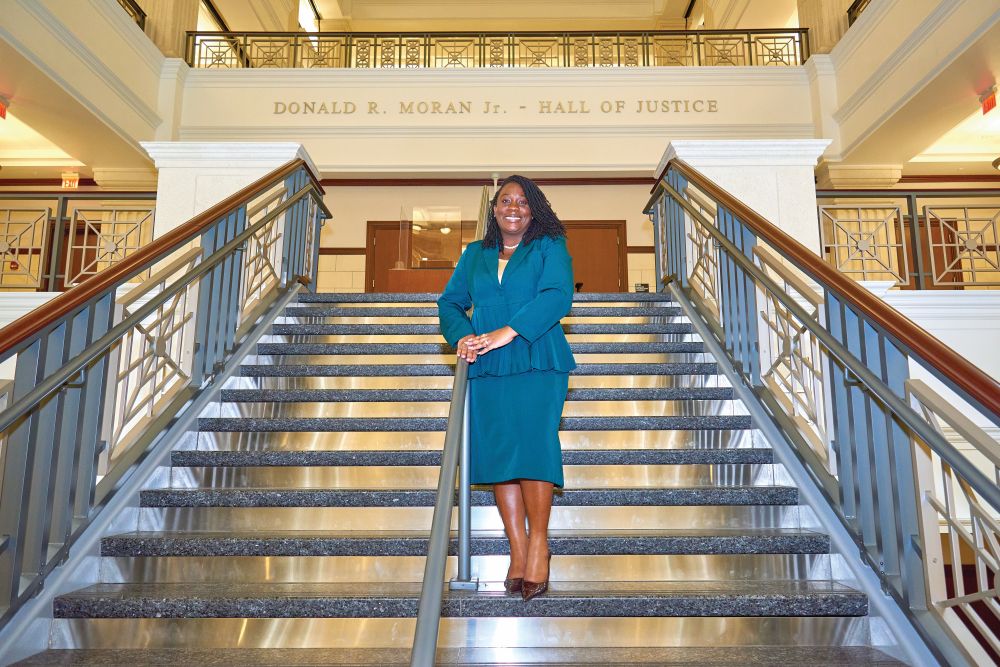

AALM: What initially drew you to the practice of law? Tell us about your journey to law school.
KL: I have wanted to be a lawyer for as long as I can remember. As a kid, being a lawyer looked like the coolest profession. I loved to talk and share my opinions but was also a strong listener and natural problem solver. Some of my best memories are of me pretending to mediate and settle disputes between my cousins. I was drawn to understanding issues and helping others navigate conflict. At the time, I had no real understanding of what becoming a lawyer required, but I knew this was my destination.
I attended Florida Coastal School of Law, where I quickly learned that law school is as much about adjustment as it is about intellect. I entered without realizing that grades were not based solely on individual performance, but on a competitive curve tied to the entire class. Concepts that once came easily now required an entirely different level of time investment, strategy, and resilience. I had to relearn how to study, how to manage pressure, and how to persist when effort did not immediately translate into results.
That experience reshaped me. It reinforced the importance of humility, adaptability and endurance, skills that continue to serve me in practice today. Looking back, my path to the law was never about knowing everything from the start. It was about trusting the process, staying committed to growth, and taking each step forward with purpose.
AALM: Were there any particular challenges you faced entering law school and/or the entry into a legal career?
KL: There was no blueprint or road map handed to me. Every step was taken with intention and each milestone required initiative and follow-through. I focused on joining relevant clubs and earning my undergraduate degree from Bethune-Cookman University. From there, I did what many first-generation college students do, I researched. I learned the requirements for law school admission, enrolled in a Kaplan prep course, and worked while studying to fund both the program and the exam.
AALM: Tell us a little bit about your early career as an assistant public defender.
KL: Early in my career, I began as a public defender, an experience that grounded my understanding of advocacy and responsibility. The role required immediate immersion into high-stakes work, with real clients and real consequences. I enjoyed being in the courtroom, thinking on my feet, and serving individuals who often felt unseen by the system. The work reinforced the importance of listening, empathy, and clear, prepared advocacy. The challenges were equally formative. Heavy caseloads, limited resources, and the emotional demands of the work required resilience and discipline. During that time, my mentors, Owen Schmidt and Mary Hickson, played a pivotal role in my development. They taught me that I have a voice, that it can make a difference, and that I should never be afraid to use it. They also instilled in me the importance of always being prepared. It is my hope that my path has helped make the legal profession more accessible for the next generation of lawyers, especially those who lack resources or guidance on how to use them.
AALM: Tell us about the decision to move into this particular firm and practice?
KL: I moved into civil law in order to expand as a professional. As we know the legal field is broad and this move provided an opportunity to practice a different aspect of law while learning to navigate the intricacies of this particular arena. In my experience, each field and arena represent a chance for learning and growth. O’Hara Law Firm, PA, has proved to be a place for this learning and growth.
AALM: Tell us about your involvement in the legal community and how that engagement has helped support your career.
KL: My involvement in the legal community has been both personal and intentional. As a first-generation lawyer, I knew early on that building relationships and finding support would be essential to my growth. Through organizations such as the D.W. Perkins Bar Association, the Jacksonville Women Lawyers Association, and the Jacksonville Bar Association, I found community, mentorship, and opportunities to lead and serve.
These organizations provided spaces where I could learn from seasoned attorneys, build confidence, and develop my professional voice. They also reinforced the importance of visibility and representation, especially for women and attorneys of color navigating the profession. Being engaged has allowed me not only to grow as a lawyer, but also to support and mentor others who may not have immediate access to resources or guidance.
That involvement has strengthened my network, expanded my perspective, and affirmed my belief that success in this profession is most meaningful when it is shared and when it creates pathways for those who follow.
AALM: Looking back on your career so far, are there any changes you would make if you could?
KL: I wouldn’t make any changes. The journey has not been easy but it has made me who I am today.
AALM: Can you share some advice with young first-generation lawyers or aspiring lawyers? What is something you wish you’d known when starting out your career?
KL: I would advise first generation and aspiring lawyers to seek mentorship and ask questions. The legal field can seem daunting but with knowledge and resources, they can enter and succeed in this arena.