






The Work Justice Firm: Justice Begins at Work

Walk into The Work Justice Firm on any given day and the first thing you notice may not be the legal credentials lining the walls or the quiet intensity of attorneys at work. It may be the dogs—curled beneath desks, padding through hallways, or gently greeting visitors. Laughter travels easily here. Doors stay open. Conversations happen face to face.

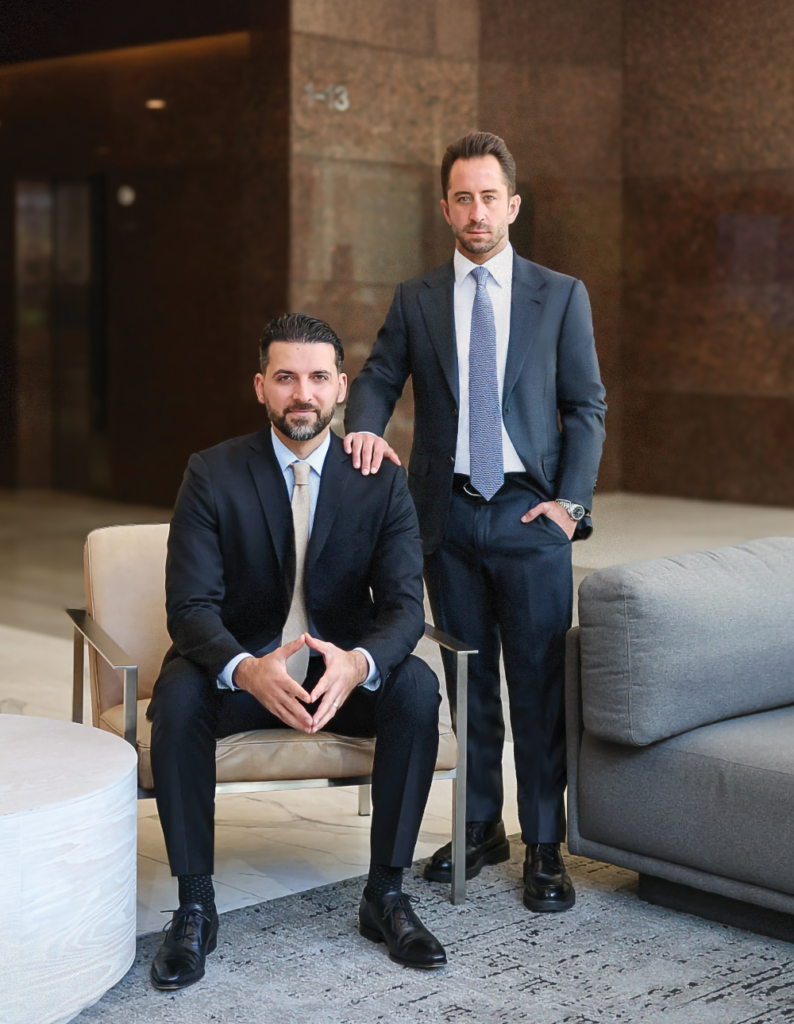
For Brent Marlis and Garen Nadir, this atmosphere is not a perk or a novelty. It is philosophy made visible.

“I think it really helps the culture,” Nadir says. “Work can be stressful, but when a Golden Retriever is nuzzling up against you, it’s not as tough. Dogs have become a big part of our work environment and ethos.”

The lightness, however, is intentional and strategic. Together, Marlis and Nadir have built a firm rooted in a shared belief: that employment law—perhaps more than any other area of practice—demands humanity as much as legal precision. Their clients come to them at moments of deep vulnerability: after losing a job, experiencing discrimination, being retaliated against for speaking up, or discovering that loyalty and hard work were met with silence or punishment. These are not abstract disputes. They are deeply personal reckonings with power, fairness, and dignity.

From the beginning, the founders understood that the way a law firm treats people internally would inevitably shape how it advocates for them externally.

Our goal is to create a culture that encourages longevity—where people stay, grow, and build their careers with us.”

A Practice Built on Purpose

Marlis founded The Work Justice Firm with a singular mission: to fight for employees who have been mistreated, marginalized, or ignored by the very systems meant to protect them. The firm’s name itself reflects that focus.

“The Work Justice Firm is a name that’s representative not just of a firm, but of a brand that we are building,” Marlis explains. “The brand says it all—we deliver justice for people in the workplace.”

That clarity of purpose has guided every decision since the firm’s inception.

“I started The Work Justice Firm with the singular purpose of representing mistreated employees,” he continues. “Our mission is to protect the rights of employees throughout California—whether that’s through claims of wrongful termination, disability discrimination, harassment, or through the workers’ compensation system. Our core values and purposeful focus have enabled us to be powerful advocates for our clients.” 

Over the course of his career, Marlis has represented employees at every level of seniority—from minimum-wage earners to executives at publicly traded companies—giving him a panoramic understanding of how workplace injustice manifests across industries and income levels. His work has earned recognition within the legal community, and his involvement with the local bar associations reflects a long-term commitment to the field.

Yet for all his credentials, Marlis remains grounded in a simple conviction: employees deserve to be treated respectfully above all else. That belief extends beyond case strategy and into how the firm operates day to day.

Deliberate Growth, Built to Last

That same intentionality defines how The Work Justice Firm has grown.

“Ours has been a steady climb,” Marlis says. “We’ve been smart about reinvesting into the firm, delaying some profit in order to build, grow, and expand in a responsible way.”

Rather than chasing rapid expansion, the firm focused on infrastructure, talent, and culture—choices that have paid dividends.

“I really appreciate Brent’s methodology,” Nadir interjects. “We haven’t tried to grow too big, too quickly. Instead, we’ve focused on slow, steady improvements so our attention remains on the objectives that have been our foundation from the start.”

That disciplined approach has allowed the firm to scale without diluting its identity.

“I think we have a unique management structure here that sets us apart,” Marlis notes. “Garen is a talented litigator and is responsible for managing our cases, which allows me to focus on marketing, operations, and growth.”

The division of responsibilities plays directly to each partner’s strengths—and has fueled measurable results.

“The outcome of that structure,” Marlis adds, “is that we’ve become one of the fastest-growing plaintiff firms in California. We currently have well over 1,000 active case files, and we’ll be doubling the size of our office to nearly 10,000 square feet this year.”

Leadership Through Connection

If Marlis is the architect of the firm’s long-term vision, Nadir is its steady operational force.

As managing attorney, Nadir brings more than a decade of experience litigating complex employment matters across California’s state and federal courts. His track record includes recovering millions of dollars for employees and aggressively pursuing claims against Fortune 500 companies.

Nadir is known for his strategic rigor and courtroom command. Yet his motivation remains deeply personal.

“What continues to drive me is the appreciation of my clients when I resolve their cases,” Nadir says. “A sincere thank-you, knowing they’re in a better place than when we met, and being part of that closure—it’s tremendously gratifying. It gives me renewed passion to continue doing this work.”

That sense of purpose is reinforced by the firm’s internal structure.

“I think the people who work here are exceptional,” Marlis says. “We trust everyone to perform at a high level and the firm’s structure allows Garen and I to compartmentalize and focus on the higher level things that require our attention. The senior managers are also instrumental in allowing us to grow while managing staff and delivering the best results for our clients.”

Nadir agrees. “Having such talented and dependable managers allows us to delegate effectively,” he says. “A lot of people fall into the trap of trying to control everything themselves. Over time, we’ve learned to trust our team and depend on the collective.”


Culture as a Legal Strategy

The partners are quick to emphasize that culture is not secondary to success, but rather central to it.

“There are no big egos here,” Marlis says. “Zero toxicity. It’s a healthy, supportive environment where we encourage and value input from everyone. Operational decisions ultimately rest with management, but they’re informed by ideas from across the team.”

“We’re heavily invested in our people,” Nadir adds. “We want everyone to do their best, and that starts with a healthy work environment.”

That investment takes tangible form through flexible hybrid schedules, mentorship, and an emphasis on work-life balance.

“We want our team to be happy and to think of us as their second family,” Nadir says. “Our goal is to create a culture that encourages longevity—where people stay, grow, and build their careers with us.”

Clients feel the difference immediately. Consultations feel like conversations. Attorneys listen before they advise. Trust is built deliberately. Many clients arrive unsure of their rights—or even their own worth—after a damaging workplace experience. They leave feeling informed, empowered, and heard.

From Consultation to Closure: How Justice Takes Shape

While culture and leadership define the internal rhythm of The Work Justice Firm, the client experience is where those values are most clearly put into action. For Marlis and Nadir, justice is not only about outcomes—it is about process. How clients are treated from the very first conversation matters as much as how their cases conclude.

Every case begins with a free consultation, conducted either in person or remotely, designed not simply to assess legal viability but to understand the person behind the claim. The initial meeting allows the firm to identify the core issues of the case while giving clients space to share their experience in their own words. Only after that conversation—once trust and clarity have been established—does the formal attorney-client relationship begin.

From there, the firm moves deliberately into gathering facts and evidence. This stage is both meticulous and collaborative. Clients are guided through what documentation is needed and why it matters, ensuring they remain informed rather than overwhelmed. The firm’s attorneys view this phase as foundational: strong advocacy depends on a complete and carefully constructed record.

Once the facts are assembled, the firm evaluates the most effective path forward—litigation or negotiation. That decision is never automatic. It is shaped by the client’s goals, the legal landscape, and the realities of timing and risk. Some cases are resolved through negotiation, where strategic pressure and preparation lead to meaningful outcomes without protracted court involvement. Others require litigation and trial, where the firm’s courtroom strength and experience come fully into play.

Throughout the process, transparency is paramount. Clients are kept informed about where their case stands, what comes next, and how long each phase may take. The litigation timeline is explained clearly, setting realistic expectations while reinforcing that progress—though sometimes incremental—is always purposeful.

The final stage, compensation and case closure, is not treated as a transaction but as a moment of resolution. For many clients, the conclusion of a case represents more than financial recovery; it marks closure after a deeply destabilizing chapter in their working lives. The firm takes that responsibility seriously, ensuring clients leave not only compensated, but confident they were heard, respected, and protected.

This structured yet human-centered approach reflects the firm’s broader philosophy: justice works best when people understand the process, trust their advocates, and feel supported every step of the way.


Looking Ahead

With strong foundations firmly in place, the firm is now focused on what’s next.

“We have a lot to be excited about in 2026 and beyond,” Marlis says. “Our expanded office space should be completed shortly, and with that will come new people and new practice areas.”

One of the most significant additions is a class action practice.

“We’re starting a class action practice and expect to be litigating class cases this year,” Nadir says, noting the alignment with the firm’s mission to address systemic workplace issues.

Marlis also points to broader reach. “We’re exploring out-of-state markets,” he says. “There are countless employees who could benefit from the work we do, and we want to reach them.”

As the firm continues to grow, so too does its team.

“We look for hunger and drive,” Nadir says. “People who learn independently, but who are also team players—people who fit our culture and want the opportunity to succeed.”

Even as The Work Justice Firm expands, its founders remain anchored to the principles that brought them here—deliberate growth, shared leadership, a culture focused on atmosphere, and a belief that justice, when practiced with humanity, is both powerful and enduring.

Because in their view, justice doesn’t begin in the courtroom.

It begins at work.

At a Glance

The Work
Justice Firm
3530 Wilshire Blvd, Suite 1460
Los Angeles, CA 90010
(323) 775-9000
workjustice.com

Practice Areas

Founded

Partners

Staff

Honors & Awards

Community Involvement