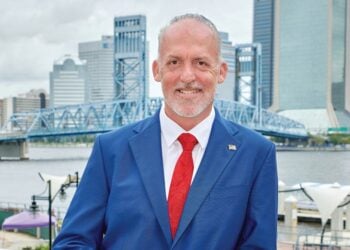

“I take a firm and direct approach to mediation. I help parties realistically evaluate risks, opportunities and potential obstacles. Sometimes people become so focused on a single position they lose sight of practical solutions. A mediator’s role is to help them see the broader picture and move toward resolution,” says Penny Schmidt, owner of Jax Mediation Center in Jacksonville.
After more than three decades as a civil trial attorney and more than twenty years as a certified mediator, Schmidt now devotes her practice to mediation full time. As owner of Jax Mediation Center, she has conducted thousands of mediations involving personal injury and wrongful death, insurance coverage, construction, commercial and other civil disputes.
Schmidt believes that many disputes can be resolved when parties have the information and perspective necessary to evaluate risk and opportunity realistically. While some cases present primarily financial issues, others involve business concerns, uncertainty, timing considerations or personal dynamics that can create barriers to settlement. Her role is to help the parties identify those barriers and determine whether a practical path to resolution exists.
Finding Common Ground
Having spent years as a trial attorney and a mediator, Schmidt has observed that people frequently approach disputes from very different perspectives. What may seem like a reasonable position to one participant can appear entirely different to another. As a result, parties can become focused on defending their views rather than exploring opportunities for resolution.
“A lot of what I do involves helping people look at a situation from a different angle. Often, the challenge is not a lack of information, but understanding information in a different way. Sometimes you don’t know what you don’t know,” Schmidt says.
Rather than directing outcomes, Schmidt views her role as helping participants evaluate their options more clearly. Through thoughtful questions, careful listening, and candid discussions about risk, she works to identify obstacles that may not be immediately apparent. In many instances, progress begins when parties gain a clearer understanding of the strengths and weaknesses of their own positions, as well as the realities facing the other side.
Throughout thousands of mediations, Schmidt has found that patience can be just as important as persuasion. “People generally make better decisions when they feel heard and understood. Once that happens, conversations often become more productive and solutions that seemed impossible at the beginning of the day may become achievable,” Schmidt says.
Preparation and Long-Term Thinking
Throughout her legal career, Schmidt participated in mediation as an advocate and as a mediator. Over time, she found that helping people resolve disputes was often more rewarding than continuing litigation through trial. As her mediation practice grew, she chose to devote her professional efforts to alternative dispute resolution full time. “Mediation gives parties an opportunity to achieve closure while avoiding the additional financial and emotional costs of prolonged litigation,” she says.
Two hallmarks of Schmidt’s practice are thorough preparation and a willingness to remain engaged for as long as the process may productively continue.
Preparation is central to Schmidt’s mediation philosophy. Before mediation, she reviews available case materials, examines relevant court filings and communicates with counsel when appropriate. She believes that coming to the session informed allows the parties to spend more time on meaningful negotiations and less time bringing the mediator up to speed.
Schmidt is also known for remaining engaged after a mediation session concludes. She follows up with counsel when appropriate, stays informed about significant case developments and remains available if further negotiations may be productive. She views mediation as a process rather than a single event and recognizes that meaningful movement sometimes occurs after the parties have had time to reflect on the discussions.
Schmidt emphasizes that timing can be an important part of resolution. Unrealistic expectations, incomplete information or circumstances outside the parties’ control may prevent an immediate agreement. Even when a case does not settle during the scheduled session, candid risk assessment and productive negotiations can narrow the issues and create a foundation for later resolution.
“Early in my mediation career, I viewed every unresolved mediation as a failure. Over time, I realized that progress can be just as important as immediate resolution. Sometimes the day of mediation is not the right day to settle, but meaningful progress can still move the parties closer to a successful outcome. My goal is to leave the process in a constructive place without closing the door.”
Outside of the Office
Outside her mediation practice, Schmidt stays very busy. She loves travelling, reading and spending time with her family and friends. She and her husband, a travel industry professional, enjoy exploring new places and learning about the people, history and culture of the destinations they visit.
Schmidt also remains active in Jacksonville’s legal and nonprofit communities. She is involved with the Jacksonville Women Lawyers Association, teaches ADR at Jacksonville University College of Law and supports Heartfelt Ministries, a nonprofit organization that assists seniors with essential everyday needs. Education, mentorship and service remain important parts of her professional and personal life.
“Whether I am working with parties in mediation, teaching future lawyers or serving the community, I try to focus on the challenge at hand and on what can be done to move forward. Most people do not want to remain in litigation indefinitely. My role is to help them evaluate the choices available and determine whether resolution is possible.”