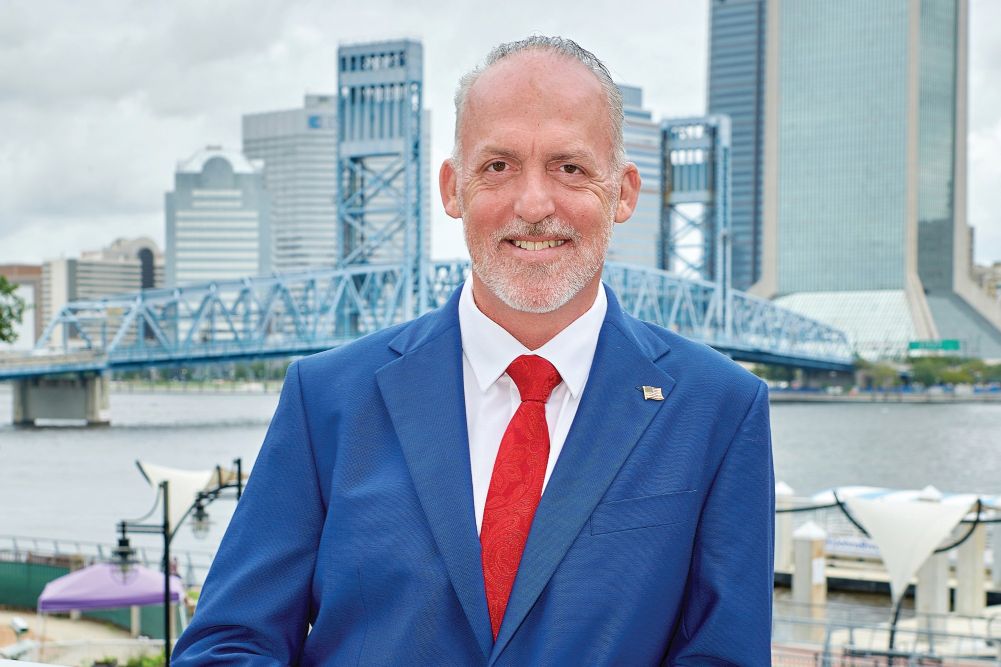

“I ask my attorneys in mediation to take off their litigation loafers and put on their settlement sneakers. That’s a good phrase that sets a positive tone for the process that follows. My mission as a mediator is to provide an atmosphere in which clients can communicate openly, share their concerns, negotiate their positions, and reach an amicable settlement in which both parties feel comfortable. Mediation should be free of pressure so that the mediation can be fruitful. To be able to have a fruitful mediation, the attorneys and the mediation clients need to come to mediation prepared, with the right information, with an attitude geared toward communication rather than conflict, and to have any unrealistic expectations in check,” says David P. Trotti, founder of David P. Trotti, PA.
Since 2000, Trotti’s law practice has primarily focused on family law. With more than 25 years of experience, Trotti has handled cases involving lemon law claims, criminal matters, bankruptcy, landlord-tenant matters, foreclosures, personal injury, wrongful death, product liability, and construction-related issues.
Today, his practice comprises approximately 80 percent in alternative dispute resolution. He has been certified as a mediator since 2008 and holds State of Florida certifications that allow him to mediate family law and circuit civil matters. Trotti has conducted more than 2,200 mediations, primarily in family law. He is a solo practitioner with one paralegal/office manager, who is also his 23-year-old son.
From a mediation perspective, Trotti says that in family law, the most challenging cases are those involving disagreement over alimony and/or the parenting plan, while cases involving significant assets with no child-related issues are the least difficult, with parties coming to the table more willing to negotiate. In a recent case, a woman had two children – one just past majority and the other with significant medical issues. The couple had many different categories of assets, including real property, investments, and pensions. Initially, Trotti did not believe the husband would agree to a settlement. He and each party believed the divorce proceedings would take three or four years. Trotti mediated a settlement between the parties, just five months after the initial action was filed.
“Both parties emailed me about their surprise and their delight at settling their issues so quickly and so completely. I think if you’re patient as a mediator and you have a good understanding of the law and you’re able to give the clients a voice, you’re going to be successful,” Trotti says.
Running a Law Firm as a Ministry
Trotti grew up in Jacksonville, attended Terry Parker High School, graduated from Jacksonville University, and earned his Juris Doctor from Florida Coastal School of Law, so he has a local perspective not only on the law, but in the people and the culture of Florida.
His journey to earning a law degree took a circuitous path. His college days focused on earning a major in music education while seeking a double major in microbiology. During his fourth year at Jacksonville, the Gulf War began. He dropped out and joined the Marine Corps, where he served at the American embassies in Dar es Salaam, Tanzania, and Vienna, Austria.
After his service, he completed his bachelor’s degree at Jacksonville, only to be recruited by the Central Intelligence Agency, where he attended the Federal Law Enforcement Training Centers in Glynco, Georgia. His service and the contacts he made led to an interest in the law and eventually to an application to law school.
Trotti’s first position as a law clerk was with the firm of Delegal and Merritt, where he helped with intakes and family law clients. After passing the bar, he opened his own firm. Initially, he had a general practice, handling a variety of matters. He says handling divorces provided an excellent school for learning to deal with a wide variety of people facing challenging times.
“I found a good bedside manner with those clients, so it’s not surprising for clients that I run my law firm as a ministry. Meaning, I treated everyone equally, with dedication, and I didn’t overcharge them.”
The move to mediation was motivated by Judge David Wiggins, who noted Trotti’s record of seeking settlement at the beginning of a trial. He quickly earned his certification as a family law mediator and, within the same year, earned his civil mediator license. “I was soon doing seven to ten mediations a week. I basically closed my litigation firm, kept the law firm open, and started mediating full time.”
Trotti has held a general contractor’s and roofing license since 2006. “That gives credibility and some value to selecting me as a mediator. I’m an entrepreneur, I’ve owned several companies, and I grew up in a self-employed household, so understanding business development, business law, and business valuations is important as a mediator,” he says.
Don’t Poke the Bear
“People say I have the patience of Job. That’s flattering, but also true. A mediator must be patient. He or she must also listen, maintain neutrality, and give each party a voice. Having a diverse background is a definite advantage,” Trotti says.
“Preparation and knowledge of the different platforms are essential to conduct a mediation. Being a mediator is not an excuse to avoid staying up to date on the law. In fact, to be a good mediator, you need to be on the cusp of the law. Understanding the case law and the new trends and what’s going on, not only with the statutes, but also the case law,” he says.
Trotti believes that although family law is often viewed as a simple area of the law, it is one of the law’s most complex areas, which can make mediations challenging.
In family law, you need a broad understanding of multiple areas of law, Trotti says. “You need to know about criminal law and how those matters affect a family law case. You need a good understanding of the impact the distribution of liabilities has on the parties. A practitioner needs to understand lease agreements, mortgage loan documents, deeds, bankruptcy, personal injury settlements, probate matters, and commercial law, to name a few areas that impact family law cases. How would a probate affect a divorce? If someone has passed away and a client is named as beneficiary to a trust or estate, you have to understand how to read a trust or estate plan, and how the client will benefit from the estate, whether it is an inheritance, income-producing, or has the inheritance been comingled with other marital assets. The broader your range of knowledge, the better you can mediate for the clients.”
He advises mediators and attorneys to come to the mediation with up-to-date financials, health insurance information with a cost breakdown, a complete list of liabilities and assets, and to be fully prepared with the documentation needed for a fruitful mediation, including information regarding retirement and investment accounts. Another nugget Trotti shared is that if a home is involved and one spouse desires to retain it, come to mediation with a plan to buy out the other spouse, refinance, or assume the mortgage. If refinancing and or assumption is the path that is desired, clients should take steps to be pre-approved prior to mediation.
“A lot of times, the first mediation becomes a discovery tool and is adjourned until the necessary documents are gathered. I’d rather get that information from the prospective mediation clients prior to mediation, so that when they return to mediation, they have the documents ready and the mediation process is more fruitful. Don’t poke the bear. Come with a good attitude. Come with a willingness to settle. A willingness to negotiate and be fully aware of your client and his or her true needs. Emanate politeness and patience during the mediation process. I think the clients feed off that,” he says.
One of the reasons for Trotti’s success in mediation is a commitment to immediate contact and to staying in touch throughout the process. Many mediation cases involve long gaps of time between a client and an attorney speaking or even preparing for mediation. Initial and early contacts are often handled by email or phone, and person-to-person contact sometimes occurs only at the initial mediation. “As a mediator when handling pro-se mediations, you must set boundaries, of course, but I believe having the connectivity with your clients is essential to a positive outcome, and that connectivity should begin from the beginning of the client-mediator relationship.”
Outside the office, Trotti is active in supporting Florida’s veterans of the armed services and served four years as vice-chair and two years as chairman of the Duval County Veterans Council. “I think any assistance our attorneys in Duval and the greater Jacksonville area can give to veterans and understanding their past and their struggles is important. I think if our legal community can get more involved in the veterans’ community, we’ll have a better understanding and be better able to represent the veterans, whether that is in family law or other struggles our veterans are faced with.”
Trotti predicts a continuing emphasis and reliance on mediation. “The business is there, and these cases can settle. Every case has an opportunity to settle if the right attitudes are in place and they’re prepared. Be engaged. Be patient. Listen. Maintain neutrality, and you and your clients will inevitably succeed.”