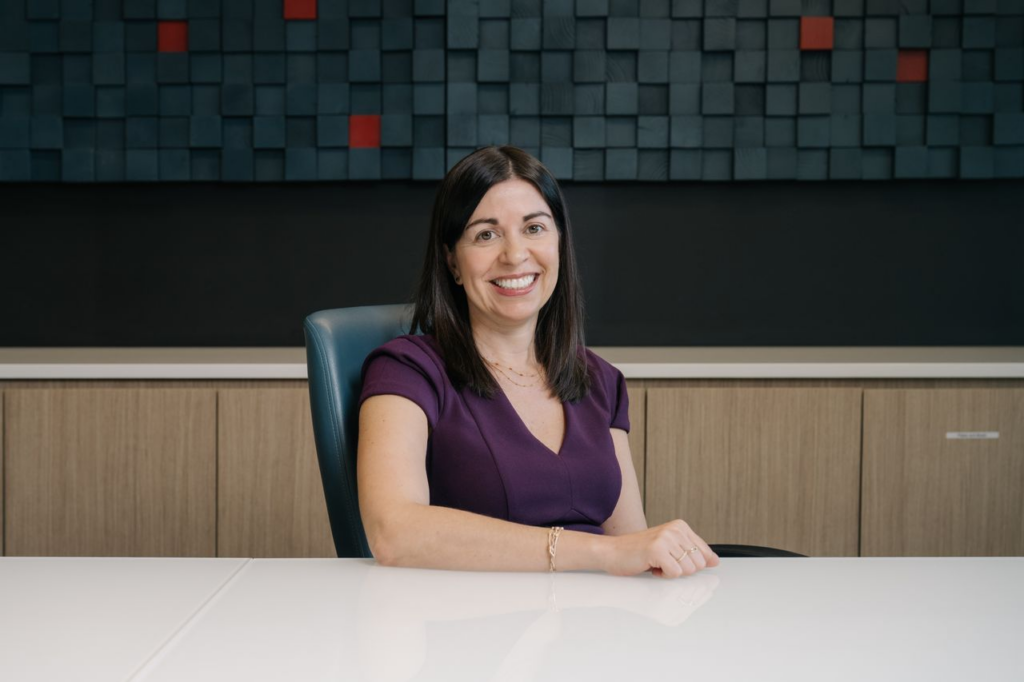

Attorney at Law Magazine sat down with Christine Dunn of Sanford Heisler Sharp McKnight to discuss her career and her work in holding the U.S. military liable for incidents of sexual assault.
AALM: What experiences and interests led you to pursue a career in the law?
CD: I attended a Quaker school from ages 12-18. Although I am not a Quaker myself, the values of Quakerism really resonated with me. Quakers believe in equality and fighting injustice; they were among the earliest and most vocal opponents of slavery and the unequal treatment of women. I wasn’t consciously aware of it at the time, but those values have stuck with me and shaped my career path. I always knew that I wanted to do work that helped people. But I also wanted to do meaningful work that helped to make the world better and fairer. I recognized early on that the law is often the most effective way to bring about those kinds of systemic, institutional changes that have the potential to make a real difference for future generations.
AALM: You have been recognized for your work holding the U.S. military liable for incidents of sexual assault. Is there any one case that has stood out in this work?
CD: Because I’m committed to creating long-lasting institutional change, I believe it’s imperative to fight the hard fights. As such, I have taken on the U.S. Military and how it handles sexual assault cases. Currently, I represent 45 servicemen who were sexually abused by an Army doctor during medical examinations. Although the perpetrator was criminally prosecuted, I believe the Army must also be held accountable for its negligence that allowed the abuse to occur. I am bringing Federal Torts Claims Act claims against the Army on behalf of my clients.
Many lawyers wouldn’t take on this fight because of the Feres doctrine – a 1950 Supreme Court opinion that bars servicemembers from filing tort claims for injuries “incident to service.” Most courts have interpreted Feres to bar even sexual assault claims. I think it is important to fight this difficult legal battle because the Feres doctrine has no place in sexual assault cases and sexual assault should never be considered “incident to service.”
AALM: You have also worked on discrimination cases in the workplace. Can you tell us about one of the more memorable cases in this area?
CD: I served as co-lead counsel in a class-action race discrimination lawsuit against the United States Marshals Service, alleging that the agency systematically discriminated against thousands of black current, former, and prospective Deputy U.S. Marshals in hiring, promotions, and assignments dating back to 1994. I first began litigating the case shortly after joining Sanford Heisler Sharp McKnight in 2008. The case was hard fought, with a long tortured procedural history. It is only now, in 2026, that we are finally wrapping up the case after obtaining $15 million for the class through settlement.
Working on this matter for more than a decade was an exercise in patience. On the one hand, I’m thrilled that we are finally getting justice for this deserving class. On the other hand, I’m sad for all the class members and, even one of our attorneys, who didn’t live long enough to see this day arrive.
AALM: Before coming to Sanford Heisler, you worked for the DOJ Civil Rights Division and as a prosecutor. Tell us about your time there and how that helped to shape your practice.
CD: For many years, I worked as a federal criminal prosecutor at the Department of Justice, prosecuting civil rights crimes around the country. The bulk of the cases I prosecuted were police misconduct cases where the perpetrators were incredibly powerful and the victims were often some of the most powerless in our society – people like prisoners and undocumented immigrants. Many of those police misconduct cases involved officers committing sexual assaults. Those cases were very victim-focused, and I spent countless hours with crime survivors and sexual assault survivors. I gained a deep passion for victim advocacy work and helping survivors to obtain justice.
After leaving the Department of Justice, it felt like a natural next chapter to co-chair Sanford Heisler’s Sexual Violence, Title IX and Victim’s Rights Practice Group. In that role, I still get to represent and fight for survivors of sexual assault and other crimes – but now I do it on the civil justice side rather than the criminal justice side. In many ways, representing victims of crime in their civil lawsuits is even more fulfilling than working as a prosecutor. In a civil case – unlike a criminal case – the victim is the one who gets to call the shots and make decisions about the trajectory of the case. That can be very empowering for a survivor. In addition, bringing a civil case against an institution that failed to keep the victim safe is an effective way to force that institution to do better next time, and create long lasting change.
AALM: You joined the firm in 2008. Tell us what first drew you to the firm and how the firm has grown over the years and helped support your career.
CD: I first joined Sanford Heisler just four years after its creation. At that time, we had only two small offices, with a handful of attorneys in each. We were a long way from having multiple offices across the country and the over 100 employees we have today. While the firm looked very different back then, the thing that impressed me most was the unwavering commitment that every single attorney and staff member had toward civil rights and social justice cases. My firm is full of people who genuinely believe in the work we do and who care about helping others. It’s gratifying to be surrounded every day by such a talented group of lawyers who are all working to make the world a better place. As I take on the important work of representing survivors of crime, I know that I have the full support and backing of my firm.
AALM: You helped to develop the firm’s Sexual Violence, Title IX and Victims’ Rights Practice Group in 2018. Tell us how you have led that group and your priorities as you’ve overseen it.
CD: When I was first helping to build and establish the Sexual Violence, Title IX and Victims’ Rights Practice Group, one of the most important things to me was that everyone who worked on these cases approach clients in a trauma informed way. Unfortunately, crime victims, especially sexual assault survivors, are often treated very poorly in our legal system. Over the years, I have encountered defense attorneys, mediators, and even judges who engage in victim blaming and shaming in sexual assault cases. I wanted to create a safe space so that every survivor who comes into contact with my firm is treated with dignity and respect. For me, the most important thing in leading this practice group was to zero in on our key core values and then help everyone who works on these cases with me to embody those values in each client interaction.
For more information, visit sanfordheisler.com.