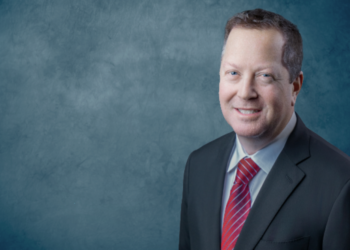

Sanford Heisler recently launched an artificial intelligence and technology litigation practice group. We sat down with Qiaojing Ella Zheng, a partner at the firm, to discuss the new group.
“It brings together plaintiff-side attorneys across employment whistleblower, civil rights, class action, financial services, public interest, and victims’ rights litigation,” Zheng said. “We represent people whose rights and interests have been affected by emerging technologies, including executives, founders/co-founders, employees, engineers, researchers, consumers, whistleblowers, and survivors of technology-facilitated abuse. The group is national, but our work grows naturally from matters we have handled in Silicon Valley and the technology sector.”
AALM: Why launch this practice now, and how does the firm’s experience inform it?
Zheng: Technology is changing how decisions are made about employment, finances, privacy, safety, and access to information. AI has extraordinary potential to benefit humanity. But its rapid development also presents extraordinary risks. The legal consequences are becoming increasingly difficult to isolate within one traditional practice area. We have long represented people facing discrimination, retaliation, fraud, and abuse of power. AI can introduce new mechanisms for those harms, but it does not erase the rights people have. Our wealth of knowledge and extensive experience in technology-related matters allows us to approach these cases with an understanding of the underlying conduct, rather than treating AI as a wholly separate legal universe.
AALM: There is no comprehensive federal AI statute. What laws govern AI litigation?
Zheng: There is no single law that governs every AI-related dispute. The applicable protections depend on what the technology does and how it causes harm. Existing employment, civil rights, consumer protection, privacy, data security, whistleblower protection, cyber security, and financial laws may apply. For example, if an algorithm is used in hiring or performance evaluation and produces discriminatory outcomes, Title VII of the Civil Rights Act may be implicated. If an employee is retaliated against for reporting suspected unlawful conduct, California Labor Code § 1102.5 may provide protection. The challenge is identifying the conduct and the legal framework that applies to it.
AALM: The group represents both people who build technology and people harmed by it. How do those perspectives inform each other?
Zheng: The people developing these technologies often are the first ones to know and have the clearest view of how the systems work, where they fail, and what risks may be overlooked. The people affected by those failures can show us the consequences in their daily lives. Representing both groups helps us understand the full picture: what happened inside an organization, how a decision was made, and how that decision impact or harm someone using it. Accountability requires both technical understanding and attention to the human experience.
AALM: What does the Kim v. xAI and SpaceX lawsuit illustrate about raising safety concerns inside AI companies?
Zheng: The complaint alleges that former xAI engineer Devin Kim was retaliated against and terminated after repeatedly raising concerns about AI safety, discriminatory bias, and the risks associated with Grok. Those allegations illustrate a central question for the industry: can the people closest to powerful technologies raise concerns about potential harm without risking their careers? Whistleblowers can be essential to public safety because they often identify problems before those problems become visible to everyone else. The case is about protecting employees who speak up at the cost of their own interests and holding powerful technology companies accountable.
AALM: What does California’s SB 53 add to Labor Code § 1102.5, and where are the gaps?
Zheng: California’s whistleblower protections provide an important foundation for employees who report suspected violations of law. SB 53, which took effect in January 2026, establishes additional protections for certain employees of frontier AI developers who disclose information about specific and substantial dangers to public health or safety and catastrophic risks. It also restricts frontier developers from using contracts to prevent covered employees from making protected disclosures. These provisions supplement, rather than replace, Labor Code § 1102.5. The coverage is specific, however, and does not extend identically to every technology company or every workplace concern. Employees need to understand which protections apply to their role and the conduct they are reporting.
AALM: What is the most damaging mistake a technology employee can make after raising a concern?
Zheng: One of the biggest risks is assuming that an internal report alone will preserve every right or create a complete record. Employees should document what they observed, when they raised the concern, and how the company responded, while being careful not to take confidential or proprietary information unlawfully. Many states also prohibit tape recording any conversation or meeting without all parties’ consent. They should seek advice from an employment attorney before taking further action, particularly if they are facing discipline, termination, or pressure to sign an agreement. The protections available can depend on the nature of the disclosure and the law involved, including California Labor Code § 1102.5 and, for certain frontier AI employees, SB 53.
AALM: Why do disputes over equity compensation arise so frequently in technology companies?
Zheng: Equity interest is often a substantial part of an executive’s or employee’s compensation, and its value can depend on complicated terms, vesting schedules, and events such as termination or a company’s sale. When founders/co-founders, executives or employees separate from the company, they may be asked to sign separation agreements that affect what they receive or retain. We advise founders, executives, and senior technology employees on what they are owed, what they may be giving up, and how to evaluate those agreements.
AALM: Many clients hope to remain in the technology industry. How does that shape your approach?
Zheng: For many clients, their careers are a central part of their lives. They may want accountability while preserving the possibility of continuing to work in the field they helped build. We take those goals seriously. Each case requires a conversation about the client’s priorities, the risks involved, and the remedies that may be available. Litigation should be informed by the person’s actual circumstances, not simply by the legal claim. We have secured many substantial and meaningful settlements for founders, executives, employees, and whistleblowers through confidential settlement negotiations outside of litigation, which help them get the recoveries they deserve while protecting their reputation and future opportunities in the field.
AALM: What are recent cases and settlements telling technology companies?
Zheng: Cases involving algorithmic hiring, AI companions, and social media platforms raise questions about responsibility when technology affects people’s opportunities, relationships, and well-being. In Mobley v. Workday, the court has considered claims arising from the use of AI-enabled tools in employment screening. The litigation illustrates how existing employment discrimination law may apply when algorithmic systems influence access to jobs. The law is still developing, but companies should not assume that deploying a new technology places their conduct beyond existing legal protections.
AALM: What changes when an algorithm or technology vendor is itself a defendant?
Zheng: It becomes important to understand who designed the system, who deployed it, what decisions each party controlled, and how the technology was used. Responsibility may be distributed across an employer, a vendor, and other actors. In Mobley v. Workday, for example, the litigation concerns alleged discrimination connected to an AI-enabled employment screening system. The case raises questions about the role a technology provider may play in employment decisions. That complexity does not make the harm less real. It means the investigation must follow the technology and the decisions surrounding it.
AALM: You studied at Zhejiang University and later worked in Silicon Valley. What drew you to representing technology workers?
Zheng: My education and professional experience in China and the United States have shaped how I understand the barriers people can face when navigating complex institutions. Silicon Valley is full of talented people whose work has enormous influence, but technical expertise does not necessarily give someone power within a company. I am fascinated by how technology interacts with the law, especially when technology evolves rapidly and can potentially cause massive harm. I am drawn to representing people who need legal protections when they voice their concerns for the public good, and to holding powerful corporations and institutions accountable when they prioritize profits over safety and compliance.
AALM: How does your Asian American Litigation and Finance practice intersect with AI and technology cases?
Zheng: I founded the Asian American Litigation and Finance Practice Group in 2019 to address the cultural, linguistic, and cross-border barriers that can make it difficult for Asian American employees, executives, entrepreneurs, and whistleblowers to seek accountability. Those issues are particularly relevant in the technology industry, where many professionals work across countries and complex corporate structures. The new practice builds on that experience.
We launched the AI and Technology Litigation Practice Group to handle matters involving AI and algorithmic discrimination, workplace retaliation tied to AI safety concerns, technology-related compensation and equity disputes, and technology-facilitated fraud, harassment and abuse. The technology will continue to evolve. Our responsibility is to ensure that the people affected by it have a meaningful path to justice.
For more information, visit sanfordheisler.com.