In the early hours of October 28, 2020, Isaac Castellanos, a group of friends and other Angelenos were celebrating the historic Dodgers World Series victory in downtown Los Angeles. They were peacefully participating in celebrations in a crowd that included families and children.
A group of 31 LAPD officers dressed in heavy tactical gear and carrying “less lethal” weapons arrived near the intersection where the crowd was gathered. Seeing the arrival of the officers, Castellanos and most of the crowd began to disperse. Despite the retreating crowd and without any warning, two officers discharged their weapons. One of the rubber bullet rounds struck Castellanos in his right eye, causing him to lose vision in that eye for the rest of his life.
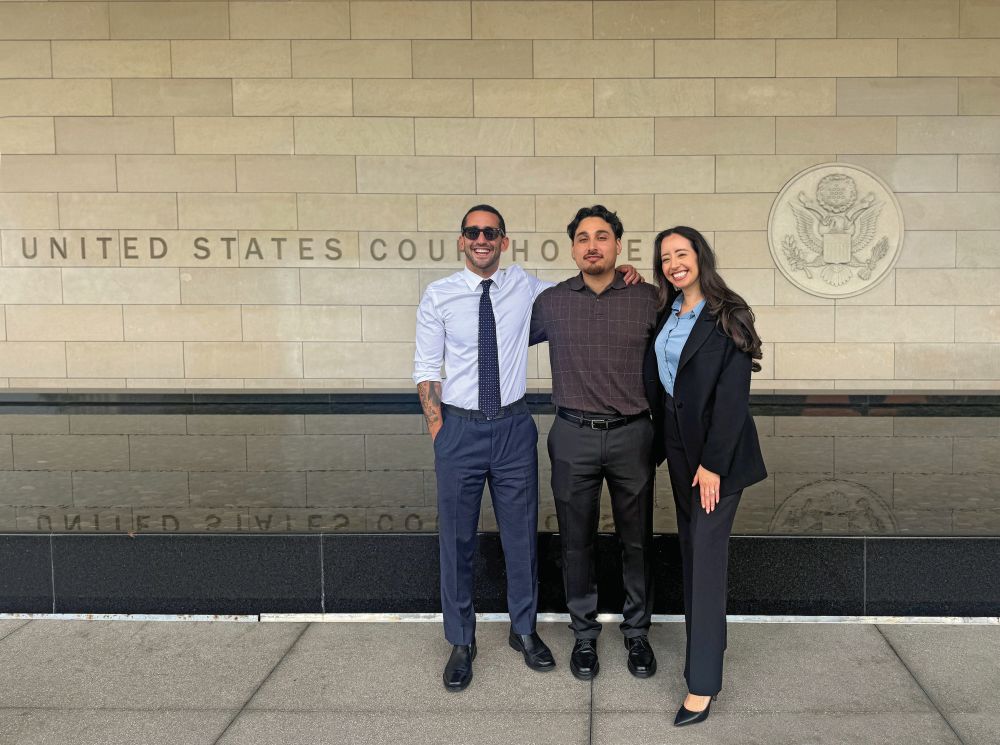
Attorney Pedram Esfandiary of Wisner Baum LLP took on Castellanos’ case. On April 16, a federal jury ordered the City of Los Angeles to pay $11.7 million in damages to Isaac Castellanos. With treble damages applied, the total judgement could potentially reach $35 million, making it one of the most consequential rulings in a “less-lethal” police force use in recent years.
We sat down with Esfandiary, following the ruling to discuss the case and his approach to it.
AALM: What stood out to you most when considering taking on the case?
Esfandiary: The officers, as the jury found, should never have fired into a retreating crowd, much less doing so without a warning and from a distance that affected the accuracy of the shot. What stood out to us was the blatant and flagrant disregard for basic LAPD policy designed to ensure that innocent bystanders like Isaac are not injured. The officers disregarded this safety policy, causing devastating, lifelong injury to our client.
AALM: What were some challenges you faced in the lead up to the trial?
Esfandiary: We did not have bodycam footage showing Isaac being struck. Accordingly, we had to piece together the evidence by reviewing footage from dozens of body cameras of officers on the scene. In collaboration with our experts, we were able to figure out the exact location of the two officers who fired, the direction of their shot, and the distance from which they fired. We also had photographic and testimony evidence of Isaac being located at the part of the intersection toward which the officers fired. It quickly became clear that the only thing that caused Isaac’s injury was the reckless shot fired by the officers.
AALM: Tell us about the key testimony that you believe led the jury to rule in your client’s favor.
Esfandiary: The officers’ unequivocal testimony at deposition and trial underscored their negligence. Neither officer took care to assess their distance from the crowd and, accordingly, fired the weapons far beyond the distance permitted by the LAPD’s policy. While policy states that these weapons should be fired no more than 50 feet away from the crowd, these officers fired from 140-145 feet away. The evidence showed that this affected the accuracy of the shot and increased the risk of striking body parts that should not be targeted with such weapons (head, torso, etc).
In fact, one of the officers admitted at trial under cross-examination that he would have had to take a “wild guess” when firing from that distance to ensure that the round was properly skip-fired in front of the crowd (which it was not).
Also, key was the lack of a dispersal order or warning that LAPD policy requires before these weapons are used to give people a chance to leave. There was no evidence that a dispersal order or warning was given at this intersection. Notably, the crowd was already dispersing, such that there was no need for the officers to fire to begin with.
Our police practices expert did a great job explaining to the jury the shortcomings in how the officers handled this situation, thereby allowing the jury to conclude that the use of force was excessive under the circumstances.
AALM: Can you speak to the legal significance of winning under California’s Bane Act?
Esfandiary: The evidence of wrongdoing was so overwhelming that the jury concluded that the officers acted with intent and/or reckless disregard when deploying force. The jury recognized that this was not just a case of negligence, but given the totality of the evidence and the circumstances in which the officers used force, it indicated that the officers knew better, should have been more careful, weren’t careful to follow basic policy, and thereby caused grievous harm to someone who had done nothing to warrant use of force against him.
AALM: What kind of impact do you believe this case will have on police force cases moving forward? Particularly those of the “less-lethal” force?
Esfandiary: We hope that this will be another nail in the coffin of the LAPD’s use of these weapon systems. They are dangerous, they are often improperly used, and needlessly deployed when, as here, the officers had plenty of time to make reasoned decisions and resort to alternative methods of crowd management – such as dispersing the crowd merely by advancing toward the crowd and arresting lawbreakers.
AALM: Is there anything else you would like to add?
Esfandiary: We were honored to represent Mr. Castellanos in this matter and are grateful for the jury’s careful consideration of the evidence and the unanimous verdict that spoke the truth.