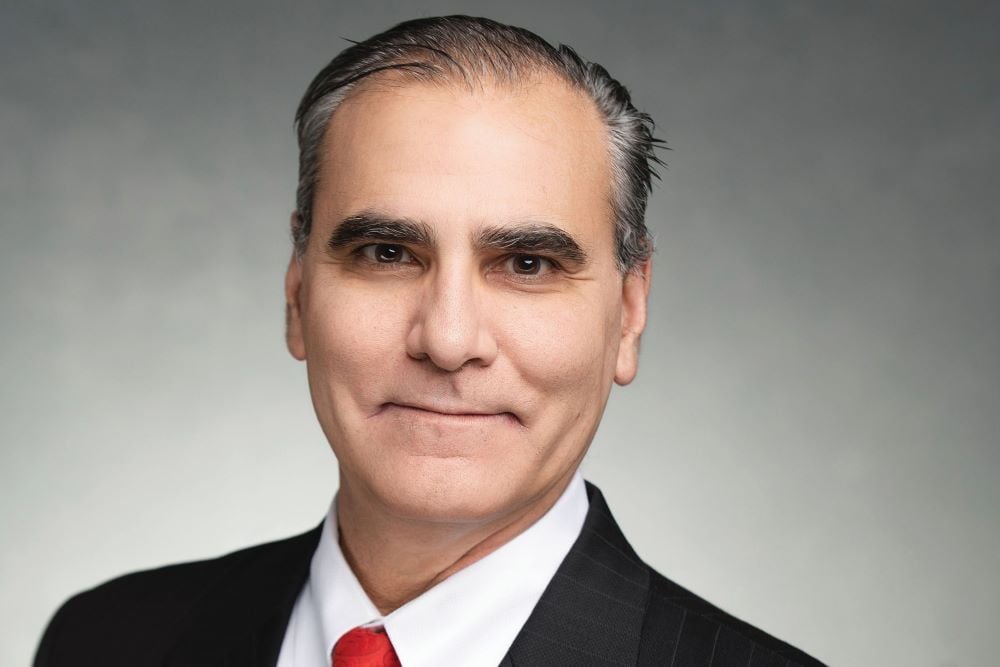

“My greatest asset as a mediator who gets cases settled is my ability to connect with the parties and attorneys personally as an equal by allowing them to express themselves fully, validate their emotions, genuinely listen to what they express factually, legally, and most importantly, emotionally. The parties and attorneys must first trust me before fruitful negotiations can begin,” says Chris Johns, founder of Chris Johns Meditations Only, whose byline is “Getting It Settled.”
Johns has litigated cases for more than 34 years. He has worked each side of the table, first as an insurance defense attorney, and then owning his own personal injury firm. He has tried more than 50 jury trials to verdict and has a keen understanding of the mindset and goals of plaintiffs and insurance companies.
“The move to mediation was due to a few different reasons,” Johns says. “I was turning 60 and I had been a tenacious advocate fighting in the trenches for more than 34 years. In other words, I was a warrior for decades and had gained invaluable experience on both sides. I thought, ‘I think it’s time to now be a diplomat, a peacemaker verses continuing to be a special forces operative and battling against my opposition daily.’”
He is a Florida Supreme Court circuit civil certified court mediator who limits his practice to being a full-time mediator exclusively. To maintain an unbiased, objective, and neutral perspective, he does not represent any parties in any areas of the law.
Johns believes the actual parties and not just their attorneys and insurance representatives must believe that he fully understands what they are saying and what each side has gone through. He includes them as an integral part of the mediation process, while showing the highest degree of respect equally to all parties.
It is critically essential to a successful mediation to humanize each party to the other party. This means getting past the we vs. them mentality and not thinking of the other party as the enemy but rather seeing them as partners who are on the same team. Each side has the mutual goal of settling the case to the mutual benefit of all parties.
He believes in the philosophy of “Let’s be hard on the issues but easy on the people and on each other.” If a party feels as though they are being attacked and disrespected, they will shut down, open and productive communications will cease, and the chances of a resolution plummet. He tells everyone that mediation is a marathon, not a sprint, and it’s not important where the negotiations begin but rather where they end.
A successful mediation is all about creating a positive and hopeful atmosphere where the parties work together to solve a mutual problem. A mediator wears many hats and should employ numerous tools to settle the case. He is the guide, the moderator, the person who should radiate hope, which is contagious, and the host who should make everyone feel at ease, comfortable, and empowered. For example, he sometimes injects a little humor to lighten the mood, a technique that has helped him resolve cases when initially it felt like the mediation was destined for failure.
He compares his role to that of a guide leading the parties through the mediation process and across the finish line, explaining that even if they don’t completely settle the case today, he will help both parties move the ball closer to the end zone, and the case will be resolved soon. He emphasizes that the mediation process is an incredible opportunity for all parties to put the case behind them, simply because all the players/deciders are together and everyone is focused only on one case, their case.
“If we don’t settle today, the focus will not be solely on your case tomorrow, but each side will resume working on many other cases. When they go to sleep tonight, the stress of the case and litigation will be behind them,” Johns says.
Johns provides all parties with his cell personal phone number and encourages the attorneys to contact him a day or so before the formal mediation commences so that he may gain insight into the parties’ positions and any issues that are better addressed in a confidential manner between the attorneys and the mediator.
He encourages each attorney to speak with him separately, independently, confidentially, at no charge, in the days leading up to the formal mediation. During these phone or Zoom calls, the parties can bring him up to speed so that he hits the ground running when the formal mediation commences. More importantly, the attorneys can give him insight into sensitive topics they would not feel comfortable discussing in the group or a private breakout session. The attorneys may explain the emotional or human dynamics between themselves, their client, or the insurance adjuster. This information is critical to laying the groundwork for a successful mediation before it even starts.
“I believe it is imperative to be completely fair and unbiased to all parties in a mediation. Whatever my job is or was, be it an insurance defense attorney, plaintiff’s attorney or a neutral mediator I have and will continue to excel and do my best regardless of the job,” he says.
He devotes his full-time practice to mediating and does not handle cases as an attorney, believing it is essential not to practice law and also be a mediator because of the appearance of bias.
Johns says, “I was a passionate and successful insurance defense attorney, a plaintiff’s attorney and I am now an excellent neutral mediator. I don’t just run offers back and forth between the parties. I am a proactive and insightful mediator who understands human behavior and the parties’ motivations, who is intuitive and who puts his all into the ultimate goal of resolving the case by establishing an atmosphere that encourages all parties to work together effectively to get to an equitable settlement so we cross the finish line together.”