



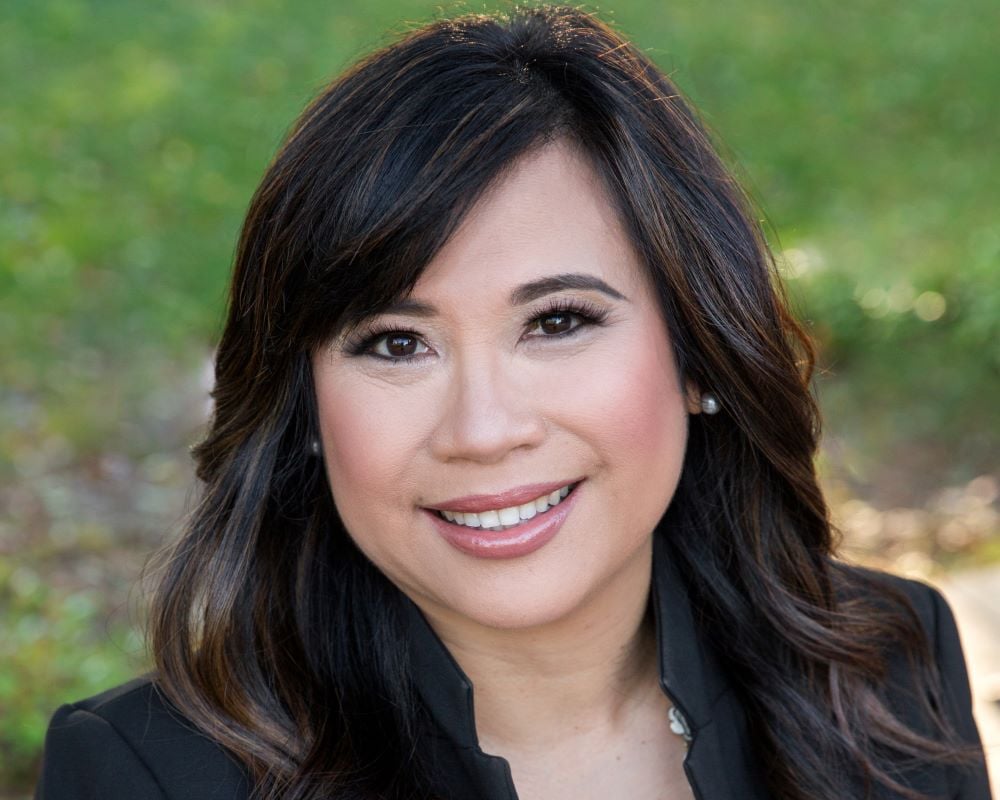

Mae Villanueva, the founder of Mae Villanueva Mediation in San Ramon, has worked with hundreds of litigants in civil disputes involving employment, wage and hour disputes, landlord-tenant and family matters.
AALM: You began your career as a paralegal. How did that experience shape your perspective on conflict—and ultimately lead you to mediation?
MV: My years as an employment litigation paralegal gave me a deep respect for the law—and an awareness of its limits in helping people resolve conflict. Litigation can achieve justice but often leaves clients drained, even when they “win.”
Those experiences led me to mediation, where resolution is about more than legal outcomes—it’s about communication, understanding, and self-determination. I still draw on my legal foundation daily, but now I use it to help attorneys and their clients prepare, negotiate, and reach meaningful agreements. It’s the best of both worlds: combining legal insight with the human side of conflict.
AALM: You helped launch Rental Mediation Services (RMS) under Alameda County’s Chapter 3.68. What inspired the program, and what impact have you seen so far?
MV: Rental Mediation Services was created in response to a growing need for accessible, early intervention in landlord–tenant disputes in Unincorporated Alameda County. When Chapter 3.68 was adopted, it gave the county a framework for mediation as a preventive tool—something that could resolve housing issues before they escalated into evictions or lawsuits.
I was inspired to help launch RMS because I saw firsthand how many disputes stemmed from miscommunication rather than dishonest intent. Mediation offered a practical way to bridge that gap—giving both housing providers and renters a chance to be heard, understand their rights and responsibilities, and craft workable solutions without going to court.
Since the program began, we’ve seen clear results: improved cooperation between landlords and tenants, faster resolutions, and fewer cases escalating into litigation. Beyond the numbers, the greatest impact has been restoring dialogue so that everyone feels they had a fair chance to work things out.
AALM: You’ve seen how prolonged disputes, especially in housing, employment, and family matters, take a personal toll. How does your mediation process address those costs while producing practical, enforceable agreements?
MV: Prolonged disputes take a toll not only legally and financially, but also emotionally and relationally. I often draw on the work of Christopher W. Moore, a pioneer in modern mediation and author of The Mediation Process, whose framework of “conflict frames” helps mediators see the different lenses through which people experience conflict.
In housing and employment mediations, parties often begin with rights and power frames—focused on who’s legally correct or holds leverage. I acknowledge those views but reframe the discussion toward interests and relationships, asking what each person truly needs to move forward. In family cases, identity and value frames often emerge, and I create space for those emotions while ensuring agreements are substantive, practical, and enforceable.
By moving between these frames—recognizing law and leverage while prioritizing understanding and dignity—I help parties reach resolutions that are fair on paper and healing in practice.
AALM: How do you see the field of mediation evolving — and what role do you hope to play in shaping that future?
MV: I see the field of mediation becoming more diverse, accessible, and grounded in cultural awareness. For too long, mediation has reflected a narrow segment of the legal and academic world, even though conflict affects people from every background. As a woman of color, I bring a perspective shaped by community, resilience, and the understanding that culture and lived experience deeply influence how people express conflict and perceive fairness.
My hope is to help shape a future where mediation reflects the communities it serves. That means expanding training opportunities, mentoring new mediators from underrepresented backgrounds, and ensuring programs are linguistically and culturally responsive.
Ultimately, I want to build spaces where people feel seen, respected, and empowered to find their own voice in the process. For me, that’s what equity in mediation truly looks like—when the table of resolution mirrors the people sitting at it.
For more information, email [email protected] or call (925) 336-5272.


Comments 1
I can’t find any atty in the US a to help me. My son and I have lost 8 yrs of our life due to a wrongful conviction of undermedication causing medical harm in the mean time he has suffered greiviously from seperation of famy thru dcf. I haven’t seen him in a yr and don’t know of I will ever see him again. I haven’t talked to him by phone even I a month with no promise of ever talking to him because the courts shut down the guardianship case so I have no access to the court. He has autism which originally was doubted by some but finally after a diagnosis from John’s Hopkins they admitted b ok your not making this up to get attention aka fictitious disorder. You are the most cable atty to handle a case like this. I ve had 22 attys and none of them can get my boy back. My heart is broken as is his . He suffered multiple injuries from their neglect but the judges are protected the state not us.