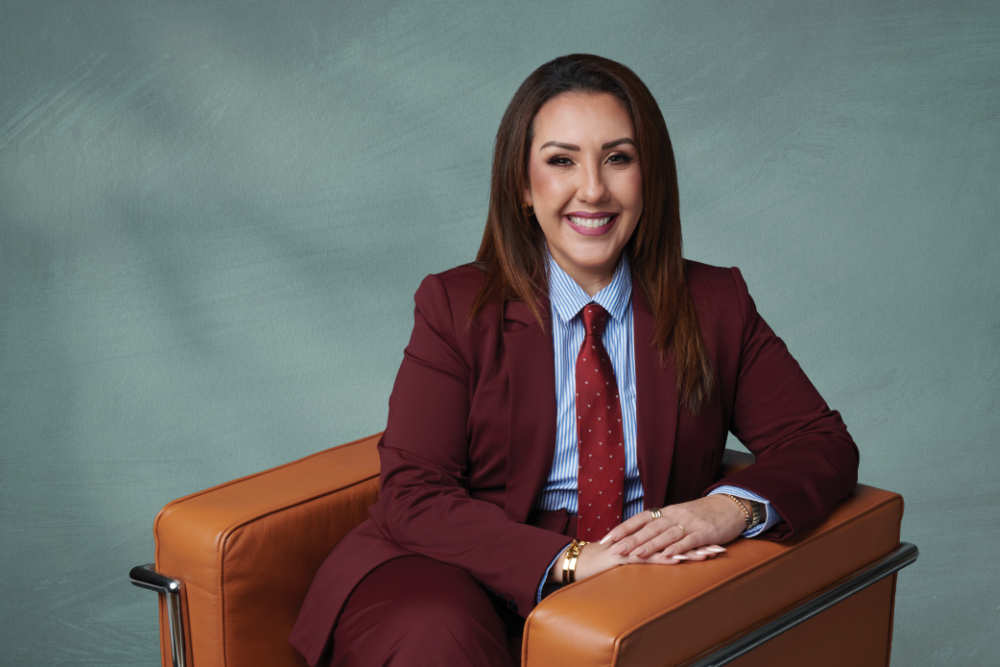

Two teenagers walked into Rachel Gusman’s practice with a newborn and a case against the United States government.
The Indian Health Service delivered their son, who suffered severe brain damage. He will never walk, never talk, and never care for himself. His parents, both under 18, had no way to fund the lifetime of care ahead. What they had was faith.
Gusman, a partner at Graves McLain Injury Lawyers in Tulsa, remembers feeling steadied by it rather than the other way around.
“I don’t know where they found their resolve,” she says. “I think they kept me more calm through it, actually.” When the mother sat for her deposition, the focus never landed on herself. It stayed on the boy and the life she could still fight to give him.
The case took five years and recently settled for $6.5 million. That money will pay for the lifetime of physical therapy, supervised living, specialized equipment, and the decades of care a profoundly disabled child requires.
In her Oklahoma home, Gusman often hears that plaintiffs are just chasing a payday.
THE CASE THAT FOUND HER
Gusman did not set out to practice personal injury law. She went to law school for family or criminal work, but found neither one fit her. Personal injury found her through a clerkship listing for a firm that needed help with construction and injury cases.
One of the firm’s partners, Dan Graves, handed her a file. A young mother’s daughter had received a routine MMR vaccination and, at 18 months, lost every developmental milestone she had reached. “Rachel, figure this out,” she recalls Mr. Graves telling her when she was a young law clerk. Gusman learned the federal vaccine injury program from the ground up and stayed with the case. Four years out of law school, it settled for $11 million.
That early win set the shape of her career, but the bigger decision came later. She would build the firm as an owner, not only litigate inside it.
Women equity partners are rare in high-volume personal injury firms, and Gusman names the reason plainly. Women enter the field, then disappear a few years in, pushed out by the work, the climate, or the pull of family.
Gusman wanted to stay, and she wanted the staying to mean something. “I also wanted to make an example and provide opportunities for other people who might not see themselves generally represented,” she says.
RUNNING THE MACHINE
Gusman oversees operations at Graves McLain. She hires, scouts the talent, and decides which tools earn a place in the firm. Growth is the constant pressure: more cases, more leads, better leads, and the staff to carry them.
The firm had built its reputation on results, but its growth had flattened, and Gusman knew the ceiling was in the marketing, not the lawyering.
Graves McLain partnered with Rankings.io to help take the firm to the next level in the digital spaces where clients now find their lawyers. “We saw some constriction in our growth, and that’s why we made the jump,” Gusman says.
Call volume rose, lead quality rose, and the firm’s digital presence drew client feedback she hadn’t seen before.
More cases meant more strain behind the phones, and Gusman is actively rebuilding parts of the operation with newer technology. She will hand AI some of the pre-litigation grind, ordering a collision report or calling an adjuster to confirm fault and coverage. The shift, she says, is “getting away from the old way we used to do things to figuring out how the new technology can help us do it quicker.”
She draws the line at the client relationship. Graves McLain checks in with every client every 30 days, and Gusman wants a person making that call. She is open to AI ever where it earns its place, but not there. “They want to hear the person who’s working for them,” she says of her clients. “No AI can replace that, and it won’t for Graves McLain.”
PEERS, NOT COMPETITORS
Gusman’s reputation now brings cases to her. One recent client lived near the Texas border but was hurt in Oklahoma. His lawyer back home searched her name, read her reviews, and called to partner on the case.
Much of that network runs through the American Association for Justice. She has spent more than ten years there, among trial lawyers from across the country. She works challenging cases alongside newer local lawyers, too, calling Graves McLain very mentorship oriented.
“We’re happy to take you on and teach you and work out a fee split, but just make it beneficial for the newbie and the client,” Gusman says. “Everybody wins in that situation.”
Told it sounds like Graves McLain has few competitors, but plenty of peers, she does not disagree.
A PRACTICE BUILT TO LAST
Gusman wants the firm to outlast her. Oklahoma’s big defense firms have reached multi-generational stability, and she sees no reason a high-volume plaintiff’s firm cannot do the same by doing the work right.
She measures her legacy by who follows her in. “I hope my legacy is that I’ve provided examples and opportunities for people who didn’t see themselves in this professional space,” she says, “whether that’s women or minorities from any walk of life. I hope that I’ve done it in a classy way, so that the profession is deemed more ethical, more diverse, more human.”