


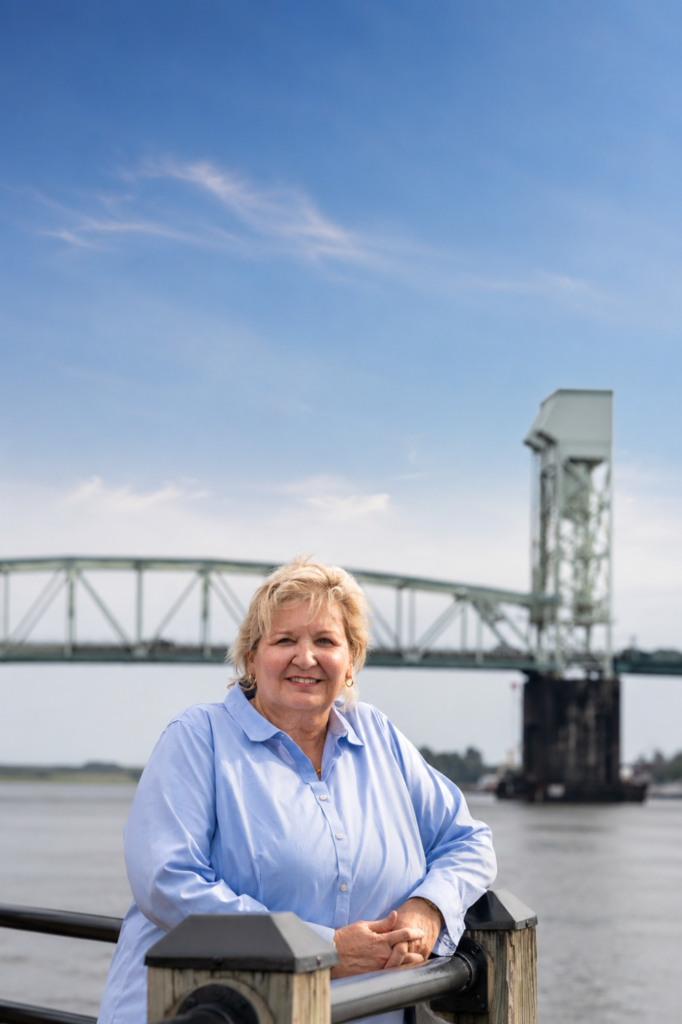
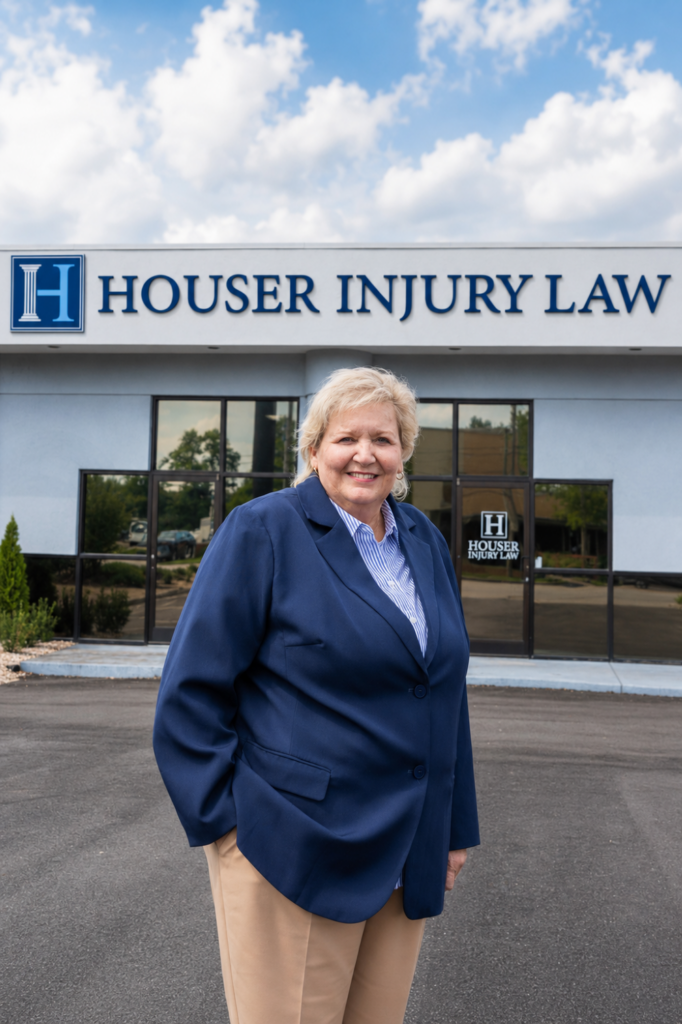


Jackie Houser: Becoming the Person with the Answers

Long before Jackie Houser ever stepped into a courtroom or purchased her own law firm, she was a little girl sitting quietly inside the office of her family’s attorney.

She remembers watching people arrive carrying burdens—questions about their families, finances, businesses and futures. More importantly, she watched them leave carrying something entirely different.

Answers.

“I wanted people to come to me with problems,” Houser recalls. “I wanted to have the answers. I wanted them to leave with answers … maybe solutions.”

It was a remarkable dream for a young girl growing up in eastern North Carolina during the early 1970s. Her family was proudly blue collar. Her mother became the first person in the family to graduate from high school. Houser would eventually become the first to graduate from college.

A career in law seemed less like an expectation than an impossibility.

At first, even Houser’s own aspirations were modest.

“I thought maybe I could be a legal secretary,” she remembers with a smile. Then one conversation changed the course of her life.

Family attorney R. Gene Braswell listened patiently as the young girl shared her dream. Then, with a firm slap of his hand across the desk, he interrupted her.

“No,” he told her. “You can be an attorney.”

“He was the first person who ever really planted that seed,” Houser says. “He made me believe that maybe I really could.”

That encouragement became the first of several pivotal moments—and several remarkable mentors—that would shape not only her career, but the kind of attorney she would ultimately become.

Dreams, however, rarely follow a straight path.

I wanted people to come to me with problems. I wanted to have the answers. I wanted them to leave with answers ... maybe solutions."

Detours to a Destination

Rather than heading directly to law school, Houser entered the legal profession through another door. She accepted a position with attorney Thomas E. Barwick, a decision that would prove every bit as life-changing as her childhood conversation with Braswell.

Barwick quickly recognized potential that Houser herself had yet to fully appreciate.

Less than a year after hiring her, he encouraged her to become a paralegal—and then did something she still speaks about with obvious gratitude.

“He paid for my paralegal education,” she says. “He invested in me.”

Even after she completed the program, Barwick never allowed her to become comfortable. “His next words were always, ‘Now … law school.'” At the time, Houser laughed off the suggestion.

Life had other plans. Marriage. Children. Responsibilities.

Like many women balancing career and family, she continued moving forward one step at a time, building a successful career as a paralegal while raising two children and eventually teaching in a paralegal program herself.

The dream never disappeared. It simply waited.

Years later, after her divorce and once both of her children had grown older, Houser made a decision that many people would have considered impossible.

She would finally go to law school.

“I waited until my youngest graduated from high school,” she says. “He went off to college … and I went off to law school.”

She laughs now at the memory. “It was either amazing or crazy. Probably both.”

Her daughter, Diane Belmont, who wears many hats in the law firm including office manager, remembers those years through a very different lens.

“Up until then, Mom worked full time while earning her paralegal degree,” Belmont explains. “She worked full time while finishing her bachelor’s degree. Law school was actually the first time she ever got to be a traditional student. Of course, even then she was mentally juggling how to pay for the college tuitions for two kids as well as law school. It’s just indicative of how strong she is, and how determined.”

For perhaps the first time in her life, Houser was able to devote herself completely to learning.

“She lived, breathed and ate law school,” Belmont says. “She absolutely loved it.”

Listening to mother and daughter recall those years together reveals an easy affection built on shared memories and mutual admiration. Houser naturally downplays many of her accomplishments, while Belmont gently fills in the details her mother is inclined to skip. It’s a dynamic that quietly surfaces throughout their conversations—and one that says as much about Houser’s character as any professional achievement.

By the time she graduated, Houser had accumulated something many new attorneys lack: years of real-world legal experience, an appreciation for the people behind every file and an unwavering understanding that law was never simply about statutes or courtrooms.

It was about helping people navigate some of life’s most difficult moments. That belief would soon be tested.

Growing and Learning

Following graduation, Houser returned to the law firm where she worked as a paralegal. There, for more than a decade, she represented insurance companies in personal injury litigation under the mentorship of attorney Robert Walker, Jr.

From a professional standpoint, it was an outstanding opportunity. She gained invaluable trial experience, learned how insurance companies evaluate claims and developed a deep understanding of defense strategy—knowledge that would later become one of her greatest assets.

But something continued tugging at her conscience.

“There absolutely needs to be a defense,” Houser says thoughtfully. “The system has to have balance.”

She pauses before continuing.

“But I found myself in situations where every claim was denied. Every injured person was viewed as if they weren’t telling the truth. I just … I wasn’t happy with myself anymore.”

It wasn’t about winning cases. It was about purpose.

“I realized that wasn’t why I wanted to become a lawyer,” she asserts.

The little girl who once dreamed of becoming the person with the answers had never imagined herself creating more obstacles for people already struggling through some of the most difficult chapters of their lives.

She wanted something different. She wanted to stand beside the injured rather than across from them. Making that decision meant walking away from a successful career and stepping into tremendous uncertainty.

Still, Houser never hesitated.

“If I’m going to practice law,” she says, “I want to be able to sleep at night knowing I’m helping people.”

I realized that wasn't why I wanted to become a lawyer."

A Purposeful Plan

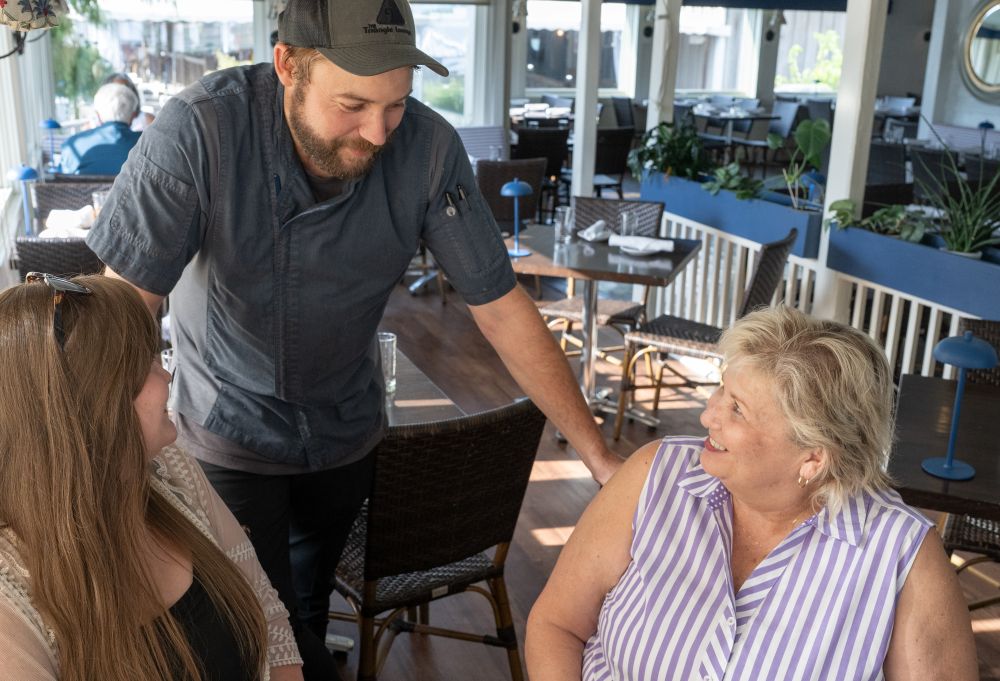
Houser with her daughter, Diane (left) and her son, Wes (middle)

Although leaving insurance defense aligned with Houser’s values, it also meant beginning again.

“It was scary,” she admits. “I had built a successful career. I knew the work. I knew the lawyers. I knew the system.”

What she didn’t know was exactly where the next chapter would lead. Like many turning points in her life, however, opportunity arrived through another relationship.

Attorney Richard Flexner had spent decades serving clients throughout southeastern North Carolina, building a respected practice founded on personal relationships and community trust. As he began considering retirement, Houser recognized not simply an opportunity to own a law firm, but a chance to continue a legacy that had already earned the confidence of generations of families.

In 2021, she purchased the practice, renaming it Flexner Houser Injury Law before eventually introducing what clients know today as Houser Injury Law.

“I never wanted to erase what Richard built,” Houser says. “I wanted to build upon it.”

That distinction says much about her leadership philosophy.

Throughout her career, Houser has consistently spoken less about changing institutions than about honoring the people who came before her. Just as she still credits Gene Braswell with planting a childhood dream, Tom Barwick with investing in her education and Robert Walker, Jr. with teaching her what it truly means to operate a successful business, she speaks of Flexner with equal respect.

Every mentor added another layer. Every relationship prepared her for the next chapter.

If Robert Walker helped Houser understand the mechanics of running a law practice, owning one challenged her to discover something even more important: how to build a culture.

Today, Houser Injury Law continues to grow throughout eastern North Carolina with offices in Wilmington and Goldsboro, but Houser is quick to point out that growth has never been her primary measurement of success.

“I’m not trying to build the biggest law firm,” she says. “That’s never been my goal.”

Instead, she measures success differently.

“Of course I want to make a good living,” she says with a laugh. “Everybody does. But I don’t have to be the richest lawyer. I don’t have to have the most cases. I want every client who walks through my door to know they’re important.”

That philosophy has quietly become the foundation of the firm’s culture.

Protecting the injured.

Providing personalized service.

Serving as a partner to her clients and in the community.

True Commitment

Those aren’t simply carefully crafted marketing phrases displayed on a website. Spend time talking with Houser and it quickly becomes apparent they describe the way she has approached every stage of her career.

She believes clients deserve direct communication with their attorney. She believes every phone call should be returned. She believes injured people should understand what’s happening in their cases rather than feeling intimidated by legal jargon.

Most importantly, she believes people deserve honesty.

“I tell clients what they need to hear, not always what they want to hear,” she explains. “Sometimes that’s a difficult conversation. But I’d rather they hear the truth from me than be surprised later.”

Ironically, she says, that honesty often strengthens the attorney-client relationship. “They know I’m going to tell them the truth.”

For Houser, trust has always mattered more than promises. That same authenticity extends well beyond the courtroom.

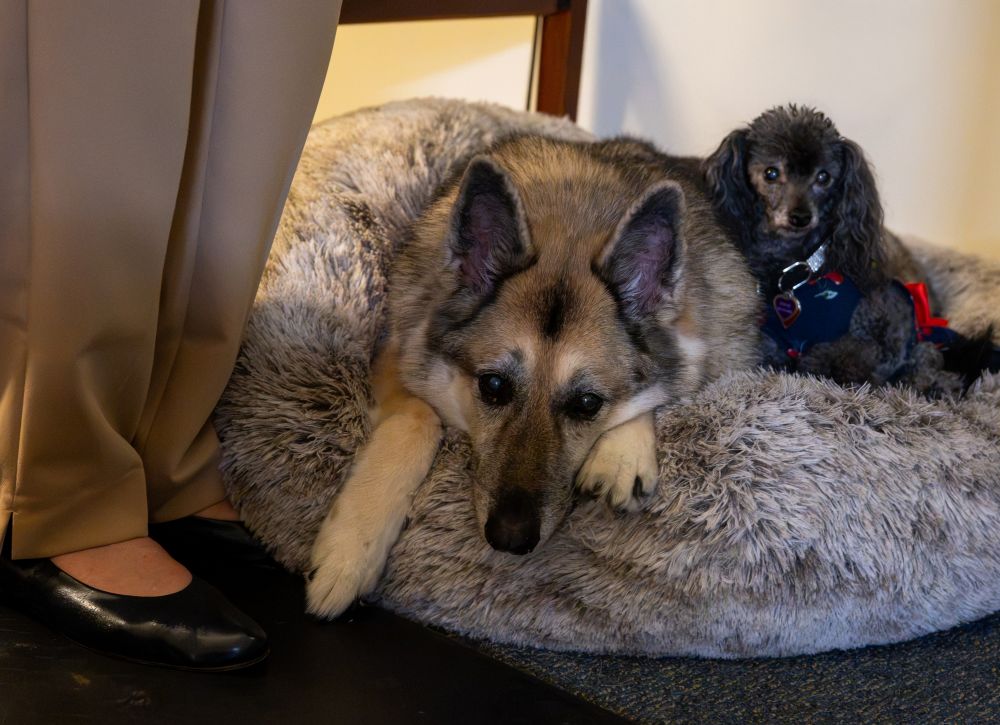
Visitors to the office are just as likely to be greeted by Sophie, Houser’s 16-year-old toy poodle, or Sasha, her beloved 13-year-old German Shepherd rescue, as they are members of the legal team. The dogs have become unofficial ambassadors, providing comfort and smiles to clients who often arrive carrying tremendous stress.

“They’re family,” Houser says simply.

So, too, is the firm’s relationship with the communities it serves.

Opening a second office in Goldsboro held particular significance because it represented more than business expansion.

It was a homecoming.

Growing up nearby, Houser has never forgotten where she came from, nor the people who encouraged her long before law school became reality. Building a presence in her hometown felt less like entering a new market than returning to invest in a community that helped shape her.

According to Belmont, watching her mother’s vision continue to evolve has been inspiring.

“As a little girl, she had this dream,” Belmont says. “But honestly, I think she’s become even more than that little girl ever imagined.”

It’s a comment that causes Houser to smile before quickly changing the subject.

Her daughter laughs. “See? That’s Mom.”

Belmont has watched that humility her entire life. “She never does anything halfway,” she says. “When she commits to something, she gives everything she has.”

That commitment extends beyond representing clients.

Houser is a certified mediator who frequently encourages practical resolutions whenever appropriate. While she has earned a reputation as a trial attorney willing to present a case before a jury, she also recognizes that every client’s definition of justice may look different.

“It’s never about my ego,” she says. “It’s about what’s best for that client.”

That perspective reflects the same lesson she first learned as a little girl sitting inside Gene Braswell’s office. Law was never simply about winning. It was about helping people find answers.

Houser's dogs Sasha and Sophie at the office.

When Dreams Are Realized

If there is one thread woven consistently throughout Jackie Houser’s life, it is her desire to leave people better than she found them. It began with a little girl who simply wanted to become the person with the answers.

Today, Houser is determined to pass those gifts forward. Not only does she host her own podcast, “Laughter and the Law” but at any given time she has multiple projects percolating.

Among her future goals is the creation of a nonprofit organization dedicated to helping individuals who are caught in the legal limbo. For Houser, it isn’t a departure from her life’s work—it is its natural progression. “The wheels of justice can turn painfully slow,” she says. “Most people cannot put their lives on hold while they are out of work, no income and waiting for a decision. I’d like to create an organization that can help them bridge that financial gap.”

She became exactly the kind of attorney she had hoped to find as a child—one who listens first, leads with compassion and never forgets that behind every legal question is a person searching for answers.

At a Glance

Houser Injury Law
3805 Oleander Drive
Wilmington, NC 28403
910-794-3221
houserinjurylaw.com

Goldsboro Office
206 E. Chestnut St.
Goldsboro, NC 27530
919-921-8780

Practice Areas

Education

Professional Memberships

Honors

HOBBIES

FAMILY

Favorite Quote