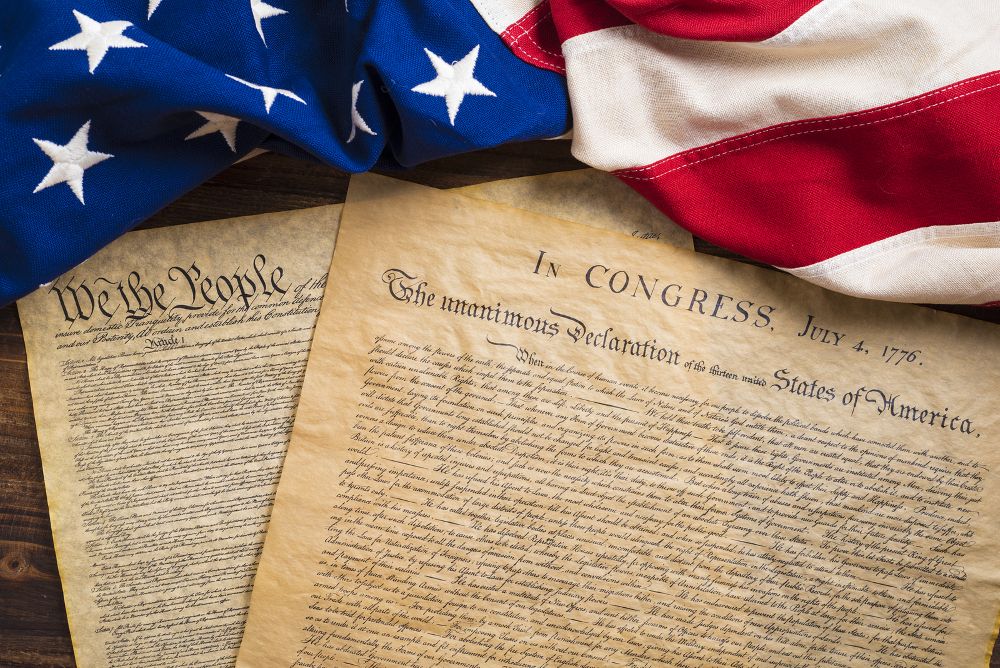

As we pause to celebrate the 250-year anniversary of the Declaration of Independence, let’s briefly consider the pioneering experiment at the heart of our government. The founding generation dared to ask what would happen if a society, however imperfectly defined, chose to govern itself. After an initial misstep with the Articles of Confederation, the Constitution of 1787 emerged as that enduring social contract. Every method or theory of interpreting the Constitution unquestionably has its flaws. That said, the originalist method of interpreting the Constitution is an important discipline if democracy is to remain at the heart of our system of government.
Justice Antonin Scalia described originalism this way: “The Constitution that I interpret and apply is not living but dead, or as I prefer to call it, enduring. It means today not what current society, much less the Court, thinks it ought to mean, but what it meant when it was adopted.” Each time a judge fails to heed Justice Scalia’s counsel and instead unilaterally updates the meaning of constitutional text based on his or her own values—or even simply to predict what the democratic process might produce—the people’s role in defining the social contract is diminished.
Subject to the supreme law of the Constitution, our republican form of government empowers ordinary citizens to elect representatives who formulate public policy through the political process. Justice Felix Frankfurter, a key proponent of judicial restraint, declared it “hostile to a democratic system to involve the judiciary in the politics of the people.”
Some argue the meaning of the Constitution should evolve. The founders agreed. The Constitution itself provides a mechanism for change through the amendment process. The Constitution has been amended 27 times, albeit not recently, but each time through democratic means and broad consensus. This ensures that changes to the social contract are difficult to achieve and insulates the process, so far as possible, from the political bargaining that characterizes ordinary legislation.
Of course, new circumstances require us to apply the Constitution in ways the founders could not have reasonably anticipated. But that does not relieve us of the responsibility to remain faithful to the Constitution’s original meaning. This does not mean attempting to divine what John Adams, Thomas Jefferson, or Alexander Hamilton would decide today. That exercise would itself be undemocratic. Rather, originalism requires disciplined and objective inquiry into the original public understanding of what the constitutional text meant at the time it was adopted.
We can argue the edges of most, if not all, constitutional rights, but surely the founders were deeply committed to an armed citizenry, private property rights, free speech, religious liberty, and protections against unreasonable searches. They understood all too well the dangers inherent in an all-powerful state. These rights remain vital today as we navigate unprecedented technological change and an increasingly pluralistic society. These liberties endure because they reflect a fundamental human desire for freedom—freedom from unwarranted state control and freedom to order one’s own life and private affairs.
To conclude that the Constitution is no longer fit for its purpose and to alter its meaning through judicial revision may appear expedient in the moment. Securing five votes on the United States Supreme Court is necessarily less cumbersome than the formal amendment process. But adhering to the framework established by the founders, unless and until it is democratically changed, is not antiquated; it is an act of respect for the role of the democratic process.
The Constitution is the enduring expression of America’s social contract. Preserving self-government requires discipline, including the judicial modesty to interpret constitutional text through objective inquiry into its original public meaning. The amendment process is the Constitution’s democratic mechanism for major changes in how Americans wish to be governed. To ignore these fundamental principles erodes the very foundation of American democracy and risks returning to the tyranny the founders sought to escape.