




Law in Motion: The Coast Guard JAG Program

After graduating from law school, Jordan Martin did what many young attorneys are trained to do – he followed the path that had been carefully laid out before him. He joined a large law firm, where the pace was demanding but predictable, and success was measured in billable hours and upward mobility. From there, he transitioned into an in-house role with an insurance company, trading one form of structure for another. On paper, it was a solid beginning – exactly the kind of trajectory law students are encouraged to pursue.

But something wasn’t right.

“I didn’t feel fulfilled,” Martin says. “It wasn’t the kind of work I wanted to be doing long term.”

It’s a realization that often arrives quietly, buried beneath deadlines and expectations. For some, it takes years to fully acknowledge. For Martin, it came early and proved impossible to ignore.

He began to reconsider not just his job, but the broader question of what he wanted his legal career to represent. The answer, it turned out, would lead him far beyond the traditional boundaries of private practice and into a role where the law is not simply applied, but lived in real time.

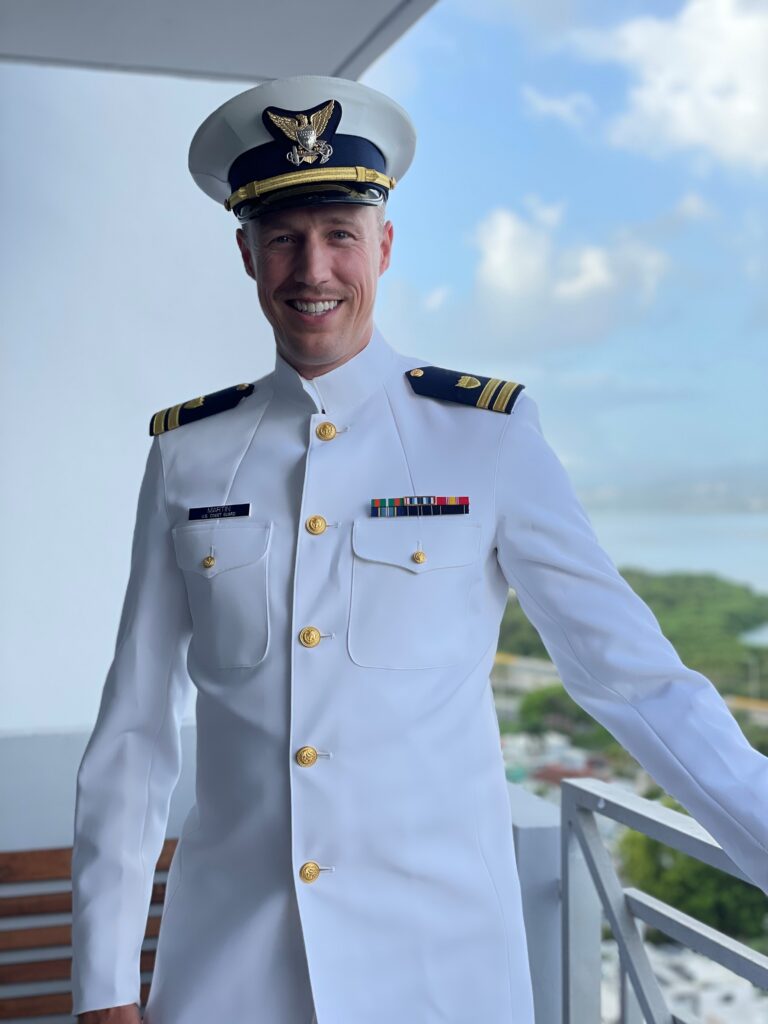
Today, as a lieutenant commander in the U.S. Coast Guard’s Office of the Judge Advocate General (CGJAG), Martin’s career reflects a fundamentally different model of legal practice—one that is defined by range, immediacy and impact. His work spans national security, international operations, and maritime law, placing him at the intersection of legal analysis and operational decision-making in ways that few attorneys ever experience.

For law students and practicing attorneys alike, his path offers a compelling alternative—one that challenges long-held assumptions about what a successful legal career can look like.

The Coast Guard’s doesn’t have a distinct “JAG Corps” but rather a legal program.  Unlike the Army, Navy, and Air Force, our judge advocates are unrestricted line officers who can also serve in non-legal positions!

Early Influences and the Seeds of Service

Martin did not grow up in a military household, but the influence of service was never far from his life. Raised in southern Virginia, he recalls being surrounded by individuals who had served in the Coast Guard and other branches of the military.

“There were a lot of people in my life who had been in the military,” he says. “Even though I didn’t come from a military family, it was always something that was around me.”

He went on to attend the University of Pennsylvania where he was deeply involved in the rowing program. The discipline and teamwork required by the sport would later mirror many aspects of his professional life, though at the time, his focus remained squarely on academics and future career opportunities.

He continued his education at the University of Miami School of Law where he was exposed to broad areas of legal practice. It was there, amid the demands of law school, that he first encountered the possibility of military service in a more concrete way.

“I went to some military recruiting events,” he recalls. “At the time, I thought it was interesting, but I didn’t feel a strong pull to pursue it.”

As he continued on with the more traditional legal career path, the idea of service remained in the background.

It would not stay there for long.

A Turning Point: Rethinking the Traditional Path

Martin’s early professional experiences provided clarity, even if not in the way he initially expected.

Working in both a large law firm and later in-house, he gained firsthand exposure to the realities of litigation and corporate legal work. While the experience was valuable, it ultimately reinforced a growing sense that something was missing.

“I realized pretty quickly that I wanted something different,” he says. “I wanted more variety, and I wanted to feel like the work I was doing actually mattered.”

That desire—for both professional diversity and a stronger sense of purpose—became the catalyst for change.

The Coast Guard’s JAG program, which he had once considered only in passing, now offered a path forward. It was not an obvious choice, nor an easy one. The program is highly selective, bringing in only a small number of candidates each year. But for Martin, it represented an opportunity to redefine what his legal career could be.

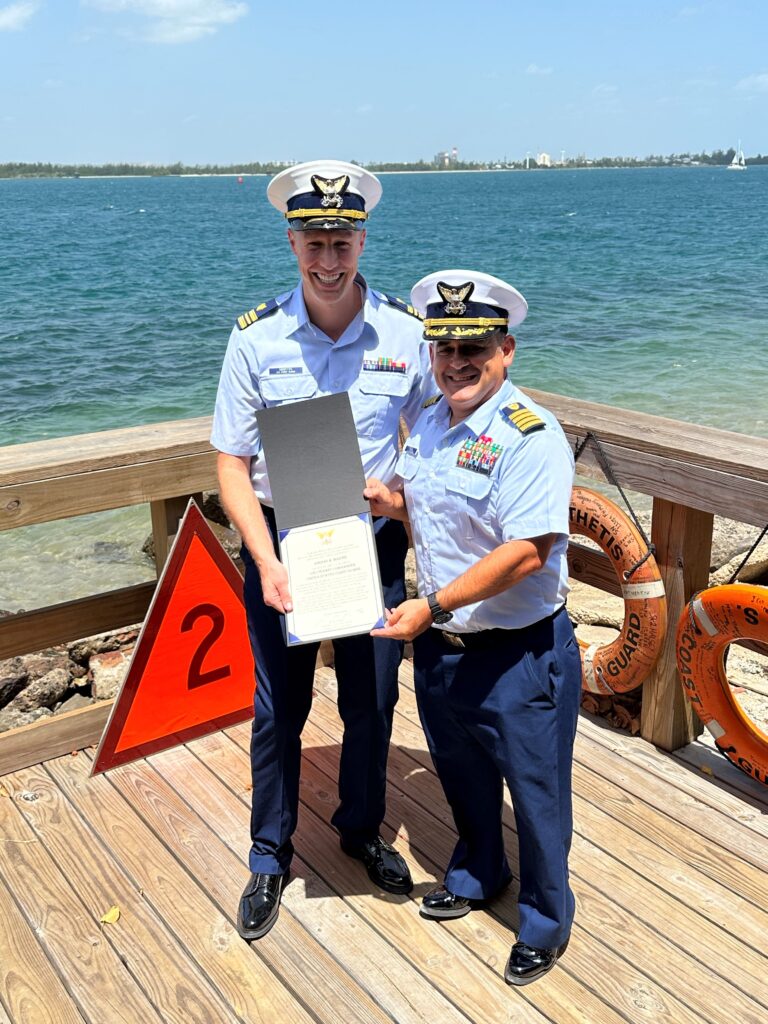
Promotion Ceremony to Lieutenant Commander

A Branch Often Misunderstood

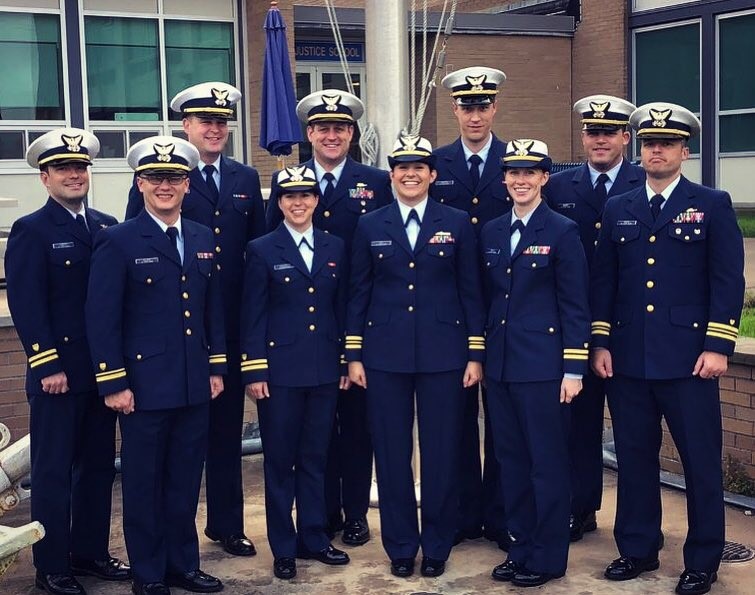
Naval Justice School Coast Guard Class Picture

One of the first things Martin learned after joining the Coast Guard was how frequently its role is misunderstood.

“People don’t always realize that the Coast Guard is one of the armed forces,” he says.

It is a distinction that matters. While the Coast Guard operates under the Department of Homeland Security in peacetime, it remains an integral part of the nation’s military framework. Its responsibilities extend far beyond domestic waters, encompassing missions that directly impact national security and international stability.

The Coast Guard’s reach is both broad and deeply interconnected with other branches of government and allied nations. For its attorneys, that means practicing law in an environment where legal guidance is not abstract or removed, but embedded directly within operational decision-making.

The SOUTHCOM Assignment

Nowhere was that reality more evident than during Martin’s assignment at U.S. Southern Command (SOUTHCOM), one of the Department of Defense’s unified combatant commands.

Serving as chief of maritime law, Martin operated at a level of responsibility that few attorneys encounter so early in their careers. In this role, he advised senior military leadership—including a four-star combatant commander—on a wide array of legal issues tied to operations throughout Central and South America and the Caribbean.

“You’re working across agencies and across countries,” Martin says. “It’s not just one organization—it’s a coordinated effort.”

His work at SOUTHCOM spanned a range of complex and high-stakes matters. He provided legal guidance on counternarcotics operations aimed at disrupting transnational criminal organizations, advised on migrant interdiction efforts that required careful navigation of both domestic and international law, and supported multinational maritime operations involving partner nations.

The role required constant coordination with the Departments of Defense, Homeland Security, and Justice, as well as with foreign governments and international organizations. In many cases, the legal questions at hand were not confined to a single jurisdiction, but instead required a nuanced understanding of overlapping authorities and competing priorities.

It was, in every sense, law in motion.

Rather than analyzing issues from a distance, Martin was part of the decision-making process itself, providing real-time legal insight that informed operational choices with immediate and far-reaching consequences.

That experience underscores a critical point—one that is central to understanding the Coast Guard’s role within the broader military and national security landscape. Despite operating under a different department, the Coast Guard is deeply integrated into the nation’s most significant strategic efforts.

Its attorneys are not observers. They are participants.

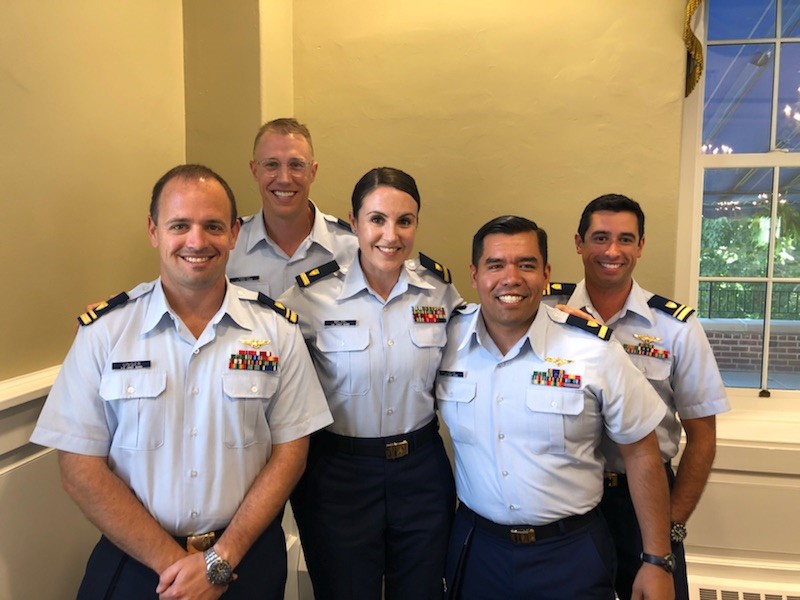
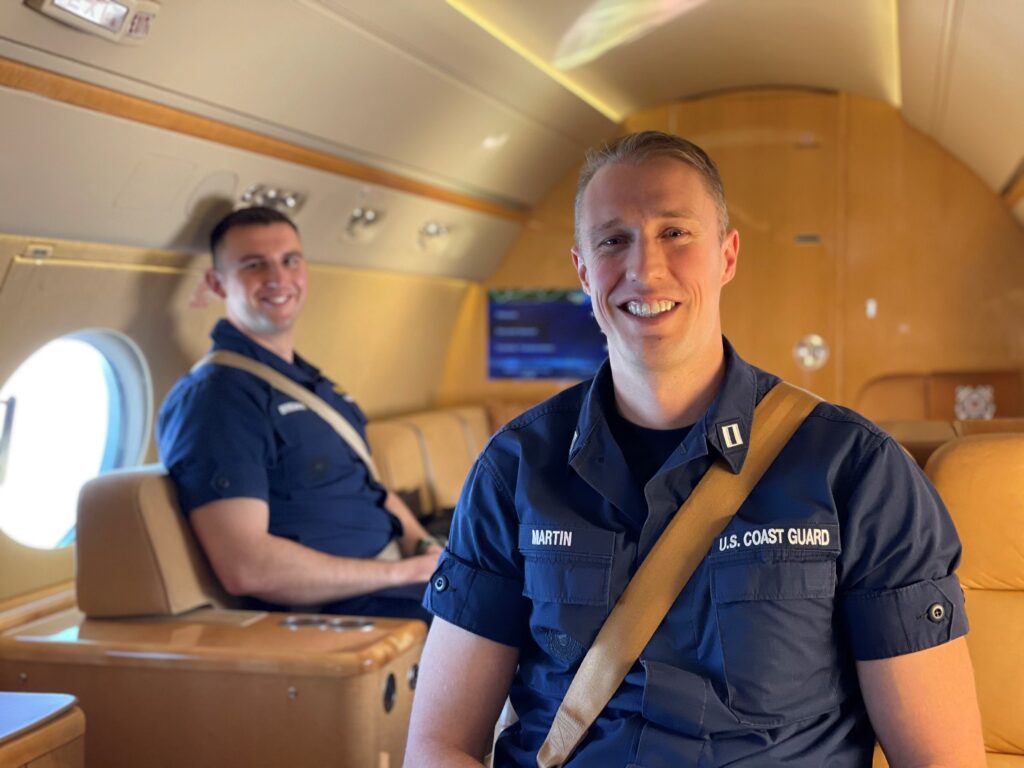
Friends And Colleagues At Direct Commission Officer School Operational Familiarization

A Practice Defined by Range and Adaptability

That same sense of immediacy and breadth carries through to Martin’s current work.

As a Coast Guard judge advocate, he routinely navigates a wide spectrum of legal issues, often shifting between disciplines within the same day. His responsibilities include advising leadership on matters of military justice, administrative law, ethics, and regulatory compliance, as well as providing guidance on operational decisions tied to ongoing missions.

“I have clients across different sectors who come to me with all kinds of questions,” he says. “You’re constantly shifting between different areas of law.”

The work requires not only a strong legal foundation, but also the ability to adapt quickly and think broadly. Unlike many civilian roles, where specialization is often necessary, Coast Guard attorneys are expected to develop a working knowledge across multiple areas of law, applying that knowledge in contexts that are constantly evolving.

In addition to more traditional legal work, Martin and his colleagues often engage with issues that are unique to the Coast Guard’s missions. This can include advising on maritime regulations, establishing safety zones, and addressing environmental concerns related to navigable waterways. It may also involve working directly with civilian agencies and private entities to ensure compliance with federal law.

The result is a practice that is as varied as it is demanding—and one that offers a level of engagement that is difficult to replicate in more conventional settings.

The Pathway: Opening the Door to Service

For those considering a similar path, the Coast Guard offers a structured yet flexible entry point through its Direct Commission Lawyer Program.

What distinguishes this pathway is its accessibility. Unlike many career tracks that require early commitment, the Direct Commission Lawyer Program is open to individuals at multiple stages of their legal journey. Law students can begin exploring the program as early as their first summer, while additional opportunities exist for second- and third-year students, as well as licensed attorneys already in practice.

Through internships and externships, participants are able to work alongside Coast Guard judge advocates, gaining hands-on experience that goes far beyond observation. They assist with real legal matters, contribute to ongoing cases and advisory work, and develop a clearer understanding of the scope and nature of Coast Guard legal practice.

“These programs give you a real sense of what the work is like,” Martin says. “You’re not just observing—you’re actually involved.”

At the same time, the program maintains a high level of selectivity, admitting only a small number of candidates each year. For those who are accepted, however, it offers a rare opportunity to begin practicing law in a setting where the impact of that work is both immediate and meaningful.

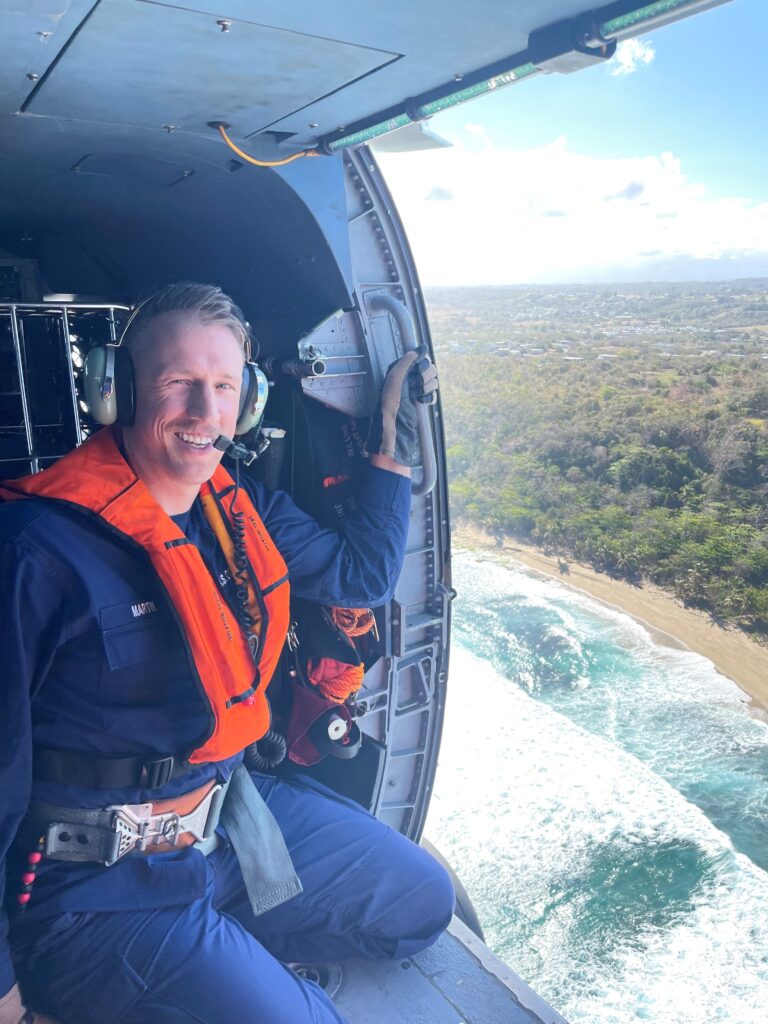
Operational Familiarization Flight Around Puerto Rico

Balancing Purpose with Practical Considerations

LCDR Martin With His Wife, Katelyn And Son, Luca

For many attorneys, the decision to pursue public service is shaped not only by professional goals, but also by financial realities.

Martin acknowledges that programs such as Public Service Loan Forgiveness play an important role in making that decision more accessible.

Through the program, individuals working in qualifying public service roles can make income-based payments on their federal student loans, with any remaining balance forgiven after 10 years of service.

“It’s definitely part of the equation,” he says. “It allows you to pursue this kind of work without feeling like you’re giving up financial stability.”

While not unique to the Coast Guard, the program complements the broader appeal of a career that offers both meaningful work and long-term practical benefits.

Redefining the Legal Career Path

Looking back, Martin’s decision to leave traditional legal practice was driven by a desire for something more—more variety, more engagement, and a stronger sense of purpose.

In the Coast Guard, he found a career that delivers all three.

His work now places him at the intersection of law and operations, where legal guidance is not theoretical, but integral to missions that shape national and global outcomes. It is a career that demands flexibility, rewards curiosity, and offers a perspective on the law that extends far beyond the courtroom.

For law students and attorneys willing to consider a less conventional path, the Coast Guard JAG program offers a compelling alternative—one that expands both the scope of legal practice and the definition of professional success.

“I wanted to do something that mattered,” Martin says. “And this has given me that.”

For more information, visit
uscg.mil/Resources/Legal/
JoinCGJAG.