
Campbell University School of Law adjunct professor Sebastian Kielmanovich approached Dean J. Rich Leonard a few years ago with an idea for a Veterans Legal Clinic at the law school. Drawing on his military experience with Army administrative law cases, Kielmanovich identified the need for a pro bono clinic to serve low-income veterans.
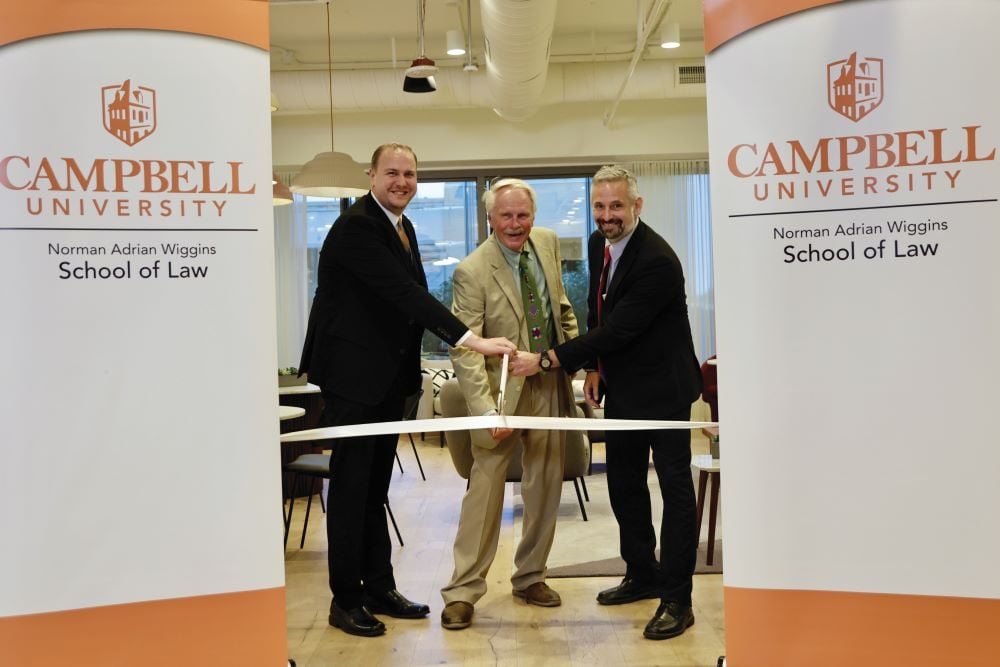
The clinic came to fruition in September thanks to an anonymous donor. Kielmanovich is the clinic’s director. He has taught as an adjunct professor at Campbell University since 2019 and is the managing attorney at Triangle Immigration & Criminal Defense.
Kielmanovich, who was commissioned in the Army at age 45, attended the Army’s direct commission course and JAG school. He then joined the Army’s Trial Defense Service. The service represents soldiers facing criminal charges and administrative actions.
“One of those administrative actions is separating a soldier with an other-than-honorable discharge categorization,” said Kielmanovich. “Sometimes the trauma associated with military service, particularly deployment situations or injuries related to and connected to disabilities with the military service, can lead to secondary effects.
“For example, excess consumption of alcohol or controlled substances as a way to cope with undiagnosed conditions could then manifest in issues such as driving while impaired. Then access to resources like Veterans Affairs benefits and resources they need to cope with the trauma begins to disappear.”
Supervised Client Meetings
The Veterans Legal Clinic started with five second-year and third-year students. There are no class prerequisites to work at the clinic. The students are certified by the N.C. State Bar as student practitioners and interact with clients under the supervision of Kielmanovich.
The clinic is now accepting pro bono clients to represent and advocate for low-income veterans of the Armed Services who are challenging their discharge categorizations. “Through supervised student representation on these petitions, former military members may gain the ability to receive greater Veterans Affairs benefits, status, and services following their separation from the Armed Services,” explained Kielmanovich.
“We are adhering to the rules of professional conduct and confidentiality. It’s especially important for the students to be trauma informed when dealing with our military clients so they are attuned to those issues, and they can be cognizant of those matters.”
Kielmanovich brings to the clinic perspective of the government’s side of military justice, and administrative matters based on his current role as a trial counsel at the 415th Chemical Biological Radiological Nuclear Brigade. Trial Counsels represent the government in administrative and military justice proceedings.
Veterans Helping Veterans
Army Staff Sergeant Casey Monahan is a 2L student at Campbell Law as part of the Army’s Funded Legal Education Program. He became a paralegal in the Army’s Administrative Law Office after being injured as an infantryman. Monahan is one of the students working in the clinic.
“I want to be able to help veterans. I want to see the real effects beyond the legal part that goes into separating people from the military,” said Monahan. “I want to look at the benefits they end up receiving, how it mentally affects them beyond what’s written in black and white.”
“I hope that these students will continue with what they are learning,” said Kielmanovich. “Even if they don’t do it as the primary practice, they may be open to doing it pro bono because many of our clients do not have the resources to pay for this service.”