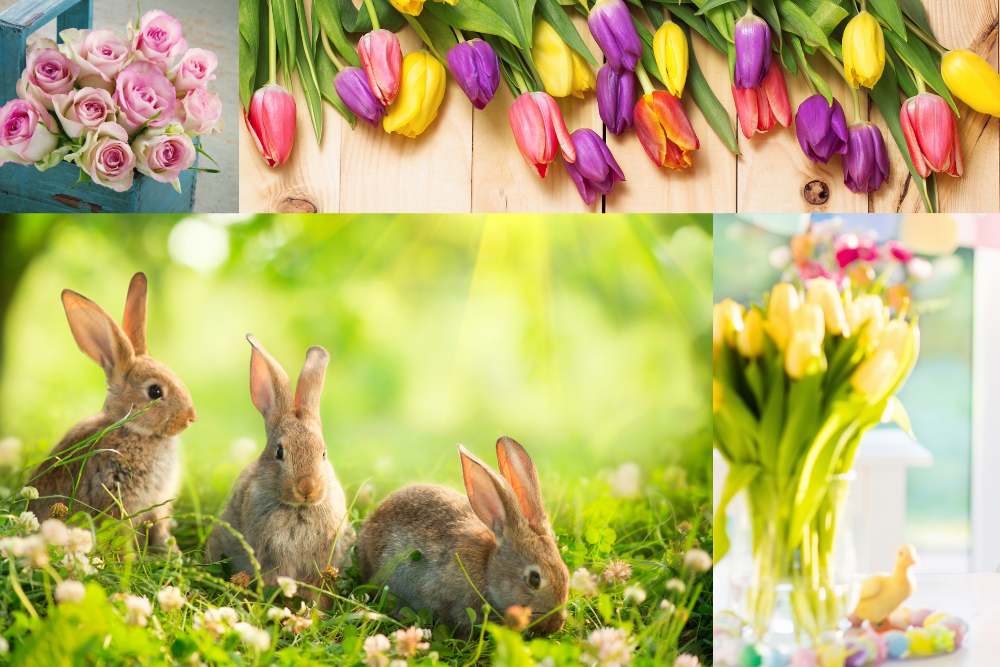
Spring is a season of renewal—and for many businesses, it is also a season of marketing. Retailers roll out Easter promotions, manufacturers introduce seasonal packaging, and service providers refresh branding for Mother’s Day, Father’s Day, graduations, and spring religious holidays such as Passover and Shavuot. Florals, bunnies, pastel colors, and messages of gratitude suddenly appear everywhere.
What many businesses do not realize is that while spring itself belongs to everyone, many of the creative works associated with spring do not. Copyright law quietly governs what can be copied, reused, adapted, or reposted, and misunderstandings are common.
Ideas Are Free; Expression Is Not
Copyright protects original expression, not ideas. The idea of spring, renewal, flowers, family appreciation, or religious observance is not protected. But the way those ideas are expressed—through writing, photography, illustrations, graphic designs, music, or video—is protected as soon as it is created.

For example, a garden center is free to promote tulips in April. However, if it copies a striking tulip photograph from a competitor’s website because “flowers are nature,” it has likely infringed copyright. The tulip is free for all; the photograph is not. In a photograph, composition, lighting, angle, and timing are creative choices protected by copyright law.
This principle was made clear by the Supreme Court in Feist Publications, Inc. v. Rural Telephone Service Co., 499 U.S. 340 (1991) which held that copyright protects originality of expression, not effort, facts, or themes.
Holidays Are Not Copyrighted—Creative Works Are
None of the spring holidays themselves are copyrighted. Easter, Mother’s Day, Father’s Day, Passover, Shavuot, and graduation season are part of shared cultural and religious life. However, original creative works about those holidays may be protected.
A marketing agency that rewrites a touching Mother’s Day poem found online—keeping the same emotional structure but changing a few words—may still infringe if the new version is substantially similar to the original. Copyright does not require word-for-word copying; it looks to whether protected expression has been appropriated.

Religious texts add another nuance. Many ancient religious works are in the public domain, but modern translations, commentaries, and study materials are often copyrighted. Quoting a modern translation without permission can raise issues even when the underlying text is centuries old.
Design, Packaging, and “Inspired By” Risks
Manufacturers frequently introduce seasonal packaging in the spring. Trouble arises when designers are instructed to make something “like” a competitor’s artwork, such as an illustrated Easter bunny or floral motif. Even if artwork is redrawn from scratch, copying distinctive visual elements—such as pose, style, or overall look—can still infringe.
The same risk applies to instruction manuals and inserts. While processes and facts described in the manuals are free to use, original wording and presentation are protected. Copying explanatory text from a competitor’s materials, even for technical products, can create legal exposure.
“Inspired by” may be acceptable creatively, but it is not a legal defense.

Social Media and the Illusion of Permission
Spring holidays drive social media engagement, and this is where copyright mistakes multiply. A retailer reposts a customer’s Father’s Day photo display because the customer tagged the store. Credit is given. The post still infringes.
Tagging, liking, or following does not transfer or infringe copyright. But beware, without express permission or a platform-provided license, reposting someone else’s photo—especially for business promotion—can violate copyright law.
“Transformative” Does Not Mean “Safe”
Some businesses assume that altering an image makes it lawful. Cropping, recoloring, stylizing, or adding branding does not automatically create fair use.
The U.S. Supreme Court addressed this directly in Andy Warhol Foundation for the Visual Arts, Inc. v. Goldsmith, 143 S. Ct. 1258 (2023), emphasizing that when a use is commercial and substitutes for the original licensing market, it may infringe even if it adds a new aesthetic or message.
A Practical Bottom Line
Spring themes are permissible, but the copying of protected expressions are not. Create original content, use properly licensed stock, secure written reposting permission, and avoid copying greeting-card text, poems, illustrations, or online photographs. A little copyright awareness ensures that creativity flourishes without legal thorns.